

CBD's Therapeutic Success: The Anti-Relapse Agent for Opioids and Alcohol
Substance Use Disorders (SUDs) present a persistent challenge to medicine, mainly due to the high probability of relapse after initial detoxification. This return to substance use is driven by powerful internal factors: comorbid anxiety and craving, or that intense desire, which act as almost irresistible biological and emotional signals. Understanding how these mechanisms work is essential to finding complementary treatments that truly help patients maintain stability.
Well, science has focused on Cannabidiol (CBD). This compound, unlike THC, does not produce psychoactive effects, which is fundamental for rigorous therapeutic research. And the big revelation here is not that CBD is a universal panacea to end the abuse of any substance, but that it acts as a spectacularly selective therapeutic agent for addictions primarily driven by anxiety and pain: Opioids and Alcohol.

I. Pharmacology and Modulation: Your Brain Needs a Calibrator
When analyzing the efficacy of CBD in this context, it is imperative to address its mechanism of action at a molecular level.
CBD operates as a pleiotropic agent (a term that describes its ability to interact with multiple biological targets simultaneously). Therefore, it does not function as a surgical inhibitor, but rather as a modulator that seeks to restore the neurochemical balance of the system.
The 5-HT1A Receptor: The Regulator of Affective Reactivity
CBD exhibits a particular affinity for the 5-HT1A receptor, a key component of the serotonergic system. Modulation of this receptor is central to its effects, as it directly interferes with anxiety and, equally crucially, with anti-impulsive behavior. Consider Alcohol Use Disorder (AUD): the pattern of consumption is often perpetuated by severely compromised impulse control. CBD, by modulating this circuit, introduces a neurochemical pause that facilitates behavioral inhibition.
The HPA Axis: Deactivating the Stress Cycle
The chronicity of addiction, especially in intensive substance use, correlates with dysfunction of the Hypothalamic-Pituitary-Adrenal (HPA) Axis, the main neuroendocrine stress response system. In the addictive context, the HPA is in a state of constant overactivation, generating the well-known chronic stress.
CBD has demonstrated the ability to modulate this HPA axis. Its action contributes to stabilizing the physiological stress response, attenuating the intense internal signal that drives substance seeking. By normalizing HPA reactivity, CBD is consolidated as an essential affective brake against relapse. If the persistent state of dysphoria or interoceptive panic can be reduced, the probability of seeking chemical mitigation substantially decreases.

II. Tangible Successes: Strategic Clinical Evidence
When we translate molecular mechanisms into clinical practice, CBD demonstrates its most notable utility in scenarios where anxiety, pain, or impulsivity are precipitating factors. This is the prototypical case of Opioid and Alcohol use.
1. Opioids (OUD): A Reinforcement Against Vulnerability
Opioid Use Disorder (OUD) is characterized by a triad of dependence, chronic pain, and severe anxiety.
- Attenuation of Craving and Anxiety: Clinical studies in patients with recent heroin abstinence have been significant. CBD not only reduced cue-induced craving (environmental stimuli associated with use), but also mitigated comorbid anxiety. These key effects persisted for approximately one week after administration, which provides the patient with a crucial window of resilience to strengthen their coping mechanisms.
- Management of Comorbid Pain: The analgesic profile of CBD offers a vital secondary benefit. By improving sleep quality and attenuating chronic pain, it facilitates patients undergoing pain treatment to reduce or even eliminate concomitant opioid use, thus achieving a decrease in overall dependence.
2. Alcohol (AUD): Controlling the Impulse for Loss of Control
AUD is often mediated by impulsivity and the attempt to self-medicate against social anxiety or psychological distress.
- Inhibition of Impulsivity: Preclinical evidence confirms that transdermal CBD inhibits the alteration of impulse control, a central behavioral deficit in AUD.
- Phase II as Proof of Concept: Currently, Phase II clinical trials are being conducted with high doses of CBD (up to 1200 mg/day) to evaluate its ability to reduce consumption, craving, and anxiety. The clinical hypothesis is that by facilitating emotional stability through 5-HT1A receptor modulation, the patient's ability to maintain abstinence increases.
- Proneurogenic Actions: A finding of particular interest is the proneurogenic effect of CBD, promoting the creation of new neurons in the hippocampus. This transcends mere symptomatic relief, suggesting a potential structural reconstruction of brain circuits involved in resilience and inhibition of drug seeking, a mechanism that could confer lasting therapeutic benefits.
Practical Considerations: CBD Dosage and Route of Administration
The question of the best form and dose is complex, since, unlike traditional drugs, CBD lacks a standardized dosage for SUDs. However, the clinical research that supports the successes in OUD and AUD has used specific routes and concentrations.
The Dose: A World of Milligrams
In the clinical field of addiction, the effective doses of CBD used in trials are significantly higher than those typically used for general well-being (mild anxiety or sleep).
- Opioid Use Disorder (OUD): Studies that showed a reduction in craving and anxiety used doses generally ranging from 400 mg to 800 mg of CBD per day, administered orally.
- Alcohol Use Disorder (AUD): Ongoing Phase II trials are exploring even higher doses, reaching up to 800 mg or 1200 mg of CBD per day, with the aim of evaluating the full therapeutic efficacy against consumption and impulsivity.
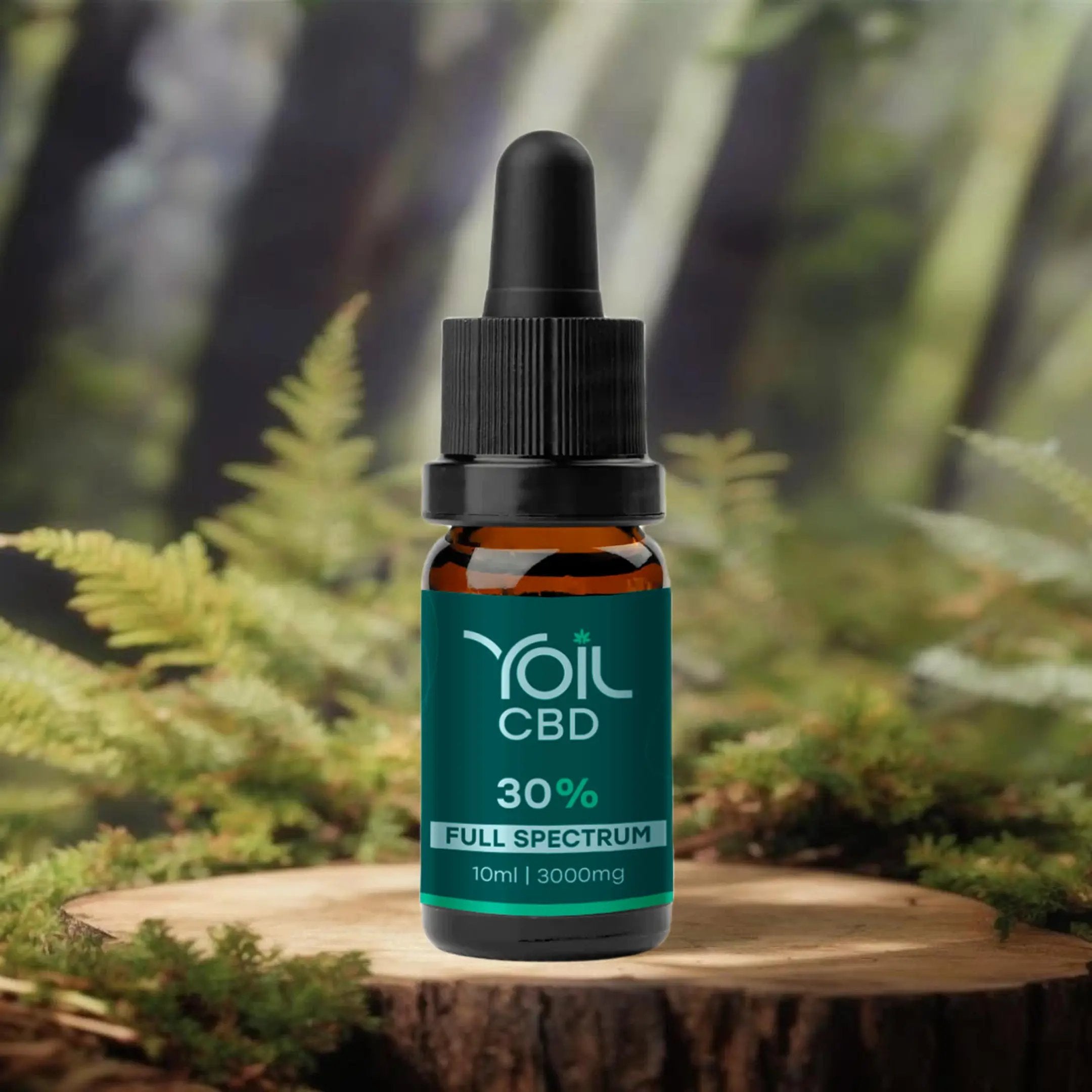
The "percentage" on the label (e.g., 10% or 25%) is less important than the total amount of pure CBD in milligrams consumed daily. For addictions, the evidence points towards the use of high doses and carefully titrated.
Epilogue: The Strategy of Calm
If SUD were a war, detoxification is the battle of the first week. The real war is won in the emotional trench of the following months.
The conclusion, therefore, is that we must stop looking for a universal anti-addiction agent. CBD is a specific adjuvant treatment for addictions dominated by negative affect (anxiety, stress, pain). By providing that emotional calm and modulating stress systems, it is not curing addiction, but buying time and peace of mind so that the patient can do the real therapeutic work. It is, in essence, the strategy of calm applied to the neurobiology of destruction. And that, today, is a scientific advance that deserves all our attention.
If you want to continue exploring the topic, here you can find information:
Exploring CBDs impact on Recovery.
The Endocannabinoid System and Cannabidiol's Promise for the Treatment of Substance Use Disorder
And if you are interested in CBD consumption, here you can explore some of our products, our collection of resins is a sensory and therapeutic journey. Carefully selected and developed to offer you a unique and highly beneficial experience. See here





%20present%20a%20persistent%20challenge%20to%20medicine,%20mainly%20due%20to%20the%20high%20probability%20of%20relapse%20after%20initial%20detoxification.%20This%20return%20to%20substance%20use%20is%20driven%20by%20powe...)