

Insomnia: The Scientific Guide and the 2 Compounds That Really Work
This article will surprise you with updated data for 2025. Insomnia is one of the most common illnesses on the planet.
Insomnia and sleep disorders are an area of increasing interest for the use of full-spectrum CBD. Many people claim that CBD and Magnesium help them sleep better, either indirectly (by reducing anxiety or pain that prevented them from falling asleep) or directly, due to a possible sedative effect at high doses.
Common causes of insomnia
-
Stress and chronic anxiety
You spend the day ruminating about the future and your brain doesn't shut down at night. Cortisol doesn't drop and ideas go in a loop. -
Poor sleep hygiene
Screens until you fall asleep, three-hour naps at midday, and no fixed routine. Zero signaling to your biological clock that it's time to sleep. -
Circadian rhythm imbalances
Rotating shifts, frequent travel, or staying up late for a hobby disrupt your internal clock. Your melatonin is in perpetual jet lag. -
Physical pain or chronic discomfort
Arthritis, migraines, reflux, or any painful reminder that your body exists wakes you up as soon as you manage to doze off. -
Stimulant and substance consumption
Coffee, tea, soft drinks, alcohol, or even drugs with a stimulating effect—if you take them late, you ruin your nervous system's natural shutdown. -
Medical and psychiatric disorders
Sleep apnea, hyperthyroidism, depression, or ADHD, among others, interfere with sleep-wake cycles. -
Environmental factors
Noise, excessive light, inappropriate temperature, or a regrettable mattress sabotage your rest.
A global analysis: Full-spectrum CBD and Magnesium for insomnia:

Introduction
Insomnia, characterized by difficulty falling or staying asleep, affects between 20% and 30% of the adult population in different regions (Figure 1). Consequences include daytime fatigue, decreased quality of life, and increased risk of metabolic and mental disorders. Full-spectrum CBD has gained attention as a non-psychoactive supplement to improve sleep, thanks to anxiolytic effects, modulated sedative effects, and possible circadian regulation.
1. Global prevalence of insomnia

Figure 1 shows estimates of insomnia symptom prevalence by region:
-
North America: 30%
-
Europe: 25%
-
Asia: 20%
-
Latin America: 28%
-
Africa: 22%
-
Oceania: 27%
2. Use of CBD for insomnia

Among CBD users, 11% in the US use it for sleep, followed by Canada (10%), the UK (9%), Spain (8%), France (6%), and Portugal (5%) (Figure 2). This reflects the normalization of CBD as a nocturnal aid, especially in North America and Western Europe.
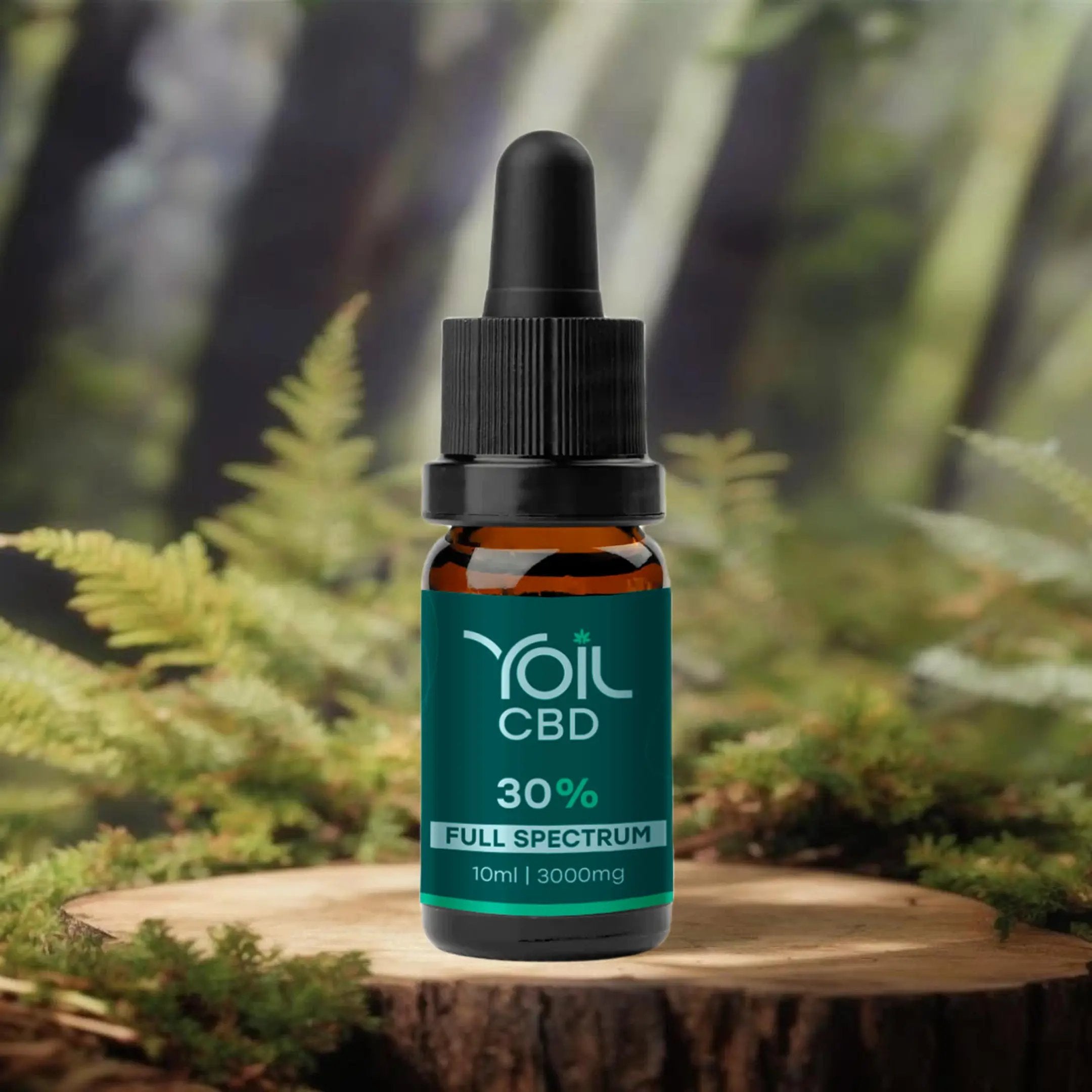
Always remember natural and organic products like Yoil CBD oil 30% high concentration and purity

3. Mechanisms of action on sleep
-
Modulation of the HPA axis: decreases nocturnal cortisol peaks, reducing overactivation of the stress system.
-
Interaction with GABA and serotonin (5-HT1A) receptors: promotes relaxation and transition to sleep.
-
Sedative effect at high doses: from ~50 mg, CBD can induce mild drowsiness.
-
Improved sleep quality: studies show fewer awakenings and a greater sense of restorative sleep without necessarily increasing total duration.
4. Administration forms and pharmacokinetics
-
Sublingual (oil): onset in 15–30 min, lasts 4–6 h; preferred for pre-sleep.
-
Gummies/Capsules: onset in 45–90 min, duration 6–8 h; discretion and controlled content.
-
Vaporization: very fast (2–10 min), short duration (2–4 h); not recommended due to pulmonary risks.
-
Topical: rarely used for insomnia; used in aromatherapy or nocturnal baths.
5. Dosage and consumption distribution

Figure 3 shows the simulated distribution of daily doses used for insomnia:
-
Main peak at 25–35 mg/day
-
Usual range 15–60 mg/day
Suggested protocol
-
Week 1: 15 mg (1 dose 1–2 h before sleep)
-
Week 2: 25 mg if no improvement (add 10 mg)
-
Weeks 3–4: adjust to 25–40 mg/day in 1 or 2 doses
-
Maintenance: 25–60 mg depending on response; do not exceed 60 mg without supervision
6. Administration preferences

Figure 4 summarizes preferred routes:
-
Sublingual: 60%
-
Gummies/Capsules: 25% (Not allowed in countries like Spain)
-
Vaporization: 10%
-
Topical: 5%
7. Market and trends

The global CBD market focused on insomnia has grown from 200 MM USD in 2018 to 1,200 MM USD in 2024 (Figure 5), driven by:
-
Increased product availability
-
Media recognition of benefits
-
Interest in natural sleep solutions
8. Safety and interactions
-
Mild effects: residual drowsiness, dry mouth.
-
Interactions: CYP450, possible potentiation of sedatives (e.g., benzodiazepines).
-
Caution: not recommended during pregnancy, lactation, or in liver diseases without medical supervision.
9. Magnesium and CBD together = sedative combo.

Magnesium: relaxes muscles, lowers cortisol, regulates GABA (neurotransmitter that tells you “sleep, dammit”).
CBD: calms the mind, lowers anxiety, regulates circadian cycle (no, it doesn't get you high, that's THC).
Together:
-
Magnesium relaxes the body.
-
CBD relaxes the mind.
Result: easier to fall asleep and stay asleep.

Magnesium Bisglycinate is the best bioavailable form to safely take Magnesium; get one of the best on the market here
10. What does science say? It's surprising
So far, the evidence is limited but promising, especially in the short term. A 2022 systematic review analyzed 34 studies on CBD and sleep: most reported some improvement in insomnia symptoms in at least part of the participants (source: pubmed.ncbi.nlm.nih.gov).
In particular, better results were observed when CBD was combined with small amounts of THC. 12 of 16 studies with CBD:THC preparations (approximately in a 1:1 ratio) showed significant improvements in sleep quality, while 4 of 7 studies with predominant CBD (without THC) also reported benefits.
Even so, there are interesting data: for example, a clinical trial in healthy young adults showed that taking 50 mg of CBD daily for 8 weeks improved subjective sleep quality compared to placebo. Sleep hours did not increase, but participants reported more restorative rest and fewer nocturnal awakenings.
Another exploratory clinical study with people with moderate to severe insomnia evaluated 150 mg of CBD before sleep and observed improvements in some sleep parameters, although the sample size was small (15 patients per group).
Conclusion
Full-spectrum CBD shows potential as an aid for insomnia, with preliminary evidence supporting its use at 25–40 mg daily and a favorable safety profile. Global adoption varies depending on regulation and culture, but market growth and preference for sublingual/substance routes reinforce its role in many users' nocturnal routines.
This is not medical advice; each person should gradually adjust doses and, if possible, consult a professional.
Tips to get started
Identify your main cause, correct it (improve habits, control pain, adjust environment), and supplement with CBD (25–40 mg sublingual 1–2 h before sleep) to boost your return to restful sleep.
THANK YOU for your comments