

CBD Poised to Become Prescription Drug for Dementia in the Elderly: 2025 Discoveries Part II
The year 2025 marked a period of rigorous validation for Cannabidiol (CBD), confirming its crucial role as a therapeutic agent in the Central Nervous System (CNS), especially in populations with limited treatment options, such as geriatric patients.
Clinical Efficacy Confirmed in Vascular Dementia
The most robust advance during this period came from a randomized, double-blind, placebo-controlled clinical trial (RCT) that investigated the impact of CBD on Vascular Dementia (VaD).
VaD is the second most common cause of major neurocognitive disorder and is significantly associated with Behavioral and Psychological Symptoms of Dementia (BPSD). These symptoms, which include agitation, anxiety, and psychosis, are factors that worsen the patient's prognosis and drastically increase the care burden.
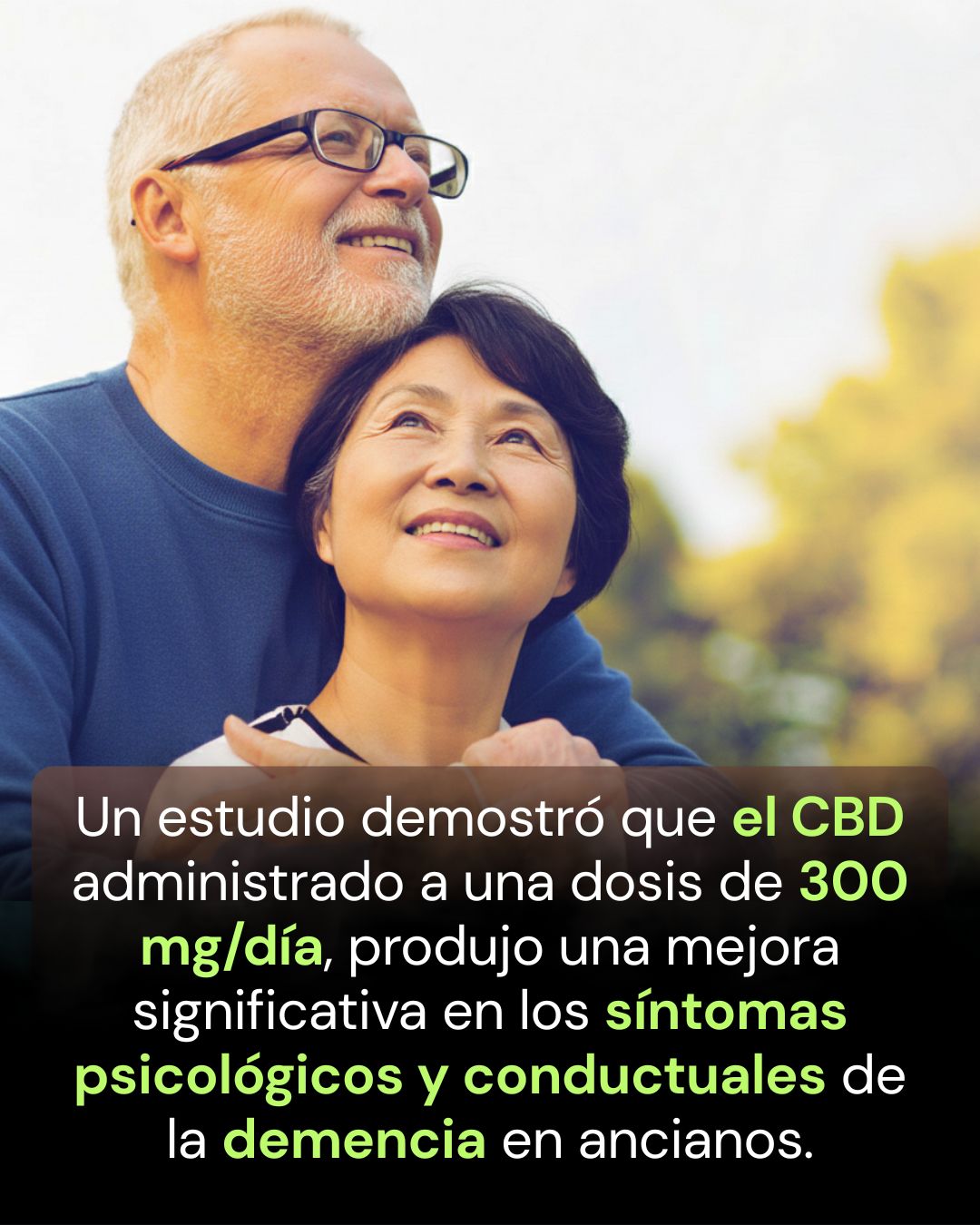
The study demonstrated that CBD, administered at a dose of 300 mg/day, produced a significant improvement in BPSD symptomatology. This efficacy is attributed to the known properties of CBD:
- Anxiolytic and Antipsychotic Action: Helps to mitigate agitation and perceptual disturbances common in dementia.
- Neuroprotection: Contributes to cellular resilience in a context of vascular damage.
The successful validation of a high dose (300 mg/day) in a controlled clinical setting underlines a critical conclusion: the development of CBD for complex psychiatric disorders requires standardized formulations and substantial dosing. Given the urgent need for effective treatments for BPSD, this evidence solidifies continued investment in phase 3 studies, bringing CBD closer to becoming a prescription drug.

CBD as a Modulator of Anxiety and Cognition
Beyond dementia, 2025 research clarified CBD's role in managing anxiety and optimizing cognitive function.
Impact on Anxiety and Executive Function: An open-label pilot study evaluated a full-spectrum CBD product in patients with anxiety. Results showed that a target daily dose of 30 mg/day correlated with significant reductions in anxiety symptoms and, notably, with improvements in measures of executive function and memory.

Regulation of Emotional Responses: Research has focused on CBD as a modulator of central neural circuits related to fear and stress:
- Alcohol Use Disorder (AUD): In patients with AUD, CBD was observed to help attenuate the amygdala's response to negative emotional stimuli, suggesting a potential for reducing emotional reactivity and craving.
- Social Anxiety Disorder (SAD): In the context of Social Anxiety Disorder, the effects of CBD are being evaluated to enhance fear extinction, a key process for overcoming phobias and conditioned anxiety responses.
These studies confirm that CBD's usefulness lies in its ability to modulate central neurological responses to stress and emotion, a field that draws from strong preclinical evidence of its anxiolytic effects.
Conclusion
The clinical landscape of 2025 is clear: CBD is transitioning from a supplement to an essential pharmaceutical component for treating complex neurological and psychiatric conditions, offering solid hope to populations lacking adequate therapeutic options.
Sources used
Cannabinoids offer new hope for safe and effective pain relief
Our CBD oil is 100% organic, naturally relieves pain and reduces anxiety.











,%20confirming%20its%20crucial%20role%20as%20a%20therapeutic%20agent%20in%20the%20Central%20Nervous%20System%20(CNS),%20especially%20in%20populations%20with%20li...)