

CBD and Pain (3/3): Observed Benefits, Safety, and Clinical Profile
Recent Clinical Studies and Scientific Evidence (2020-2024)
From 2020 to the present, several relevant clinical studies exploring the use of CBD for pain have been conducted. Below is a summary of some highlighted recent clinical trials, indicating the type of pain addressed, sample size, design, and main findings:
-
Capano et al. 2020 (USA) – Chronic Pain and Opioid Use: Study with 131 chronic pain patients treated with a CBD-rich oil (dose ~60 mg daily) for 8 weeks. Design: prospective, open-label controlled comparing initial vs. final state. Result: CBD produced a significant reduction in pain (improvement on 0-10 scale) and improved quality of life. Notably, 53% of patients reduced or eliminated opioid intake after CBD treatment. Practical Application: Suggests that daily oral CBD could serve as an adjunct treatment for chronic pain to improve pain control and decrease opioid dependence.
-
Verrico et al. 2020 (USA) – Osteoarthritis Pain in Dogs: 20 dogs with osteoarthritis received CBD (20 mg/day encapsulated or 50 mg/day unencapsulated) vs. placebo for 4 weeks. Design: randomized double-blind in veterinary models. Result: Dogs treated with CBD showed less pain and more physical activity according to veterinary scales, compared to the placebo group. In addition, systemic absorption of CBD with good bioavailability and reduction of inflammatory markers was confirmed. Practical Application: Provides evidence of CBD's analgesic efficacy in osteoarthritis, supporting its potential use in pets and pointing to quantifiable anti-inflammatory benefits that could translate to humans with osteoarthritis.
-
Bebee et al. 2021 (Australia) – Acute Lower Back Pain: 143 patients with acute lower back pain in the emergency room received a 400 mg dose of oral CBD or placebo along with standard analgesia. Design: randomized double-blind trial. Result: No significant differences in pain reduction at 2 hours (or in the need for additional analgesics) were observed between CBD and placebo. Practical Application: In cases of intense acute pain managed with opioids or rescue NSAIDs, a single dose of CBD showed no added benefit; this suggests that CBD may not be useful for acute emergency analgesia, although the specific context (very acute pain) may have limited its effect.
-
Heineman et al. 2022 (USA) – Thumb Base Arthritis: 18 patients with rhizarthrosis (osteoarthritis at the base of the thumb) applied a CBD ointment (6.2 mg/mL, 1 mL/dose) or placebo to the carpometacarpal joint for 2 weeks. Design: randomized double-blind trial. Result: The CBD group had significantly greater pain reduction and improved hand function than placebo. No relevant adverse events were reported. Practical Application: Topical CBD proved effective in alleviating pain and stiffness in localized osteoarthritis, presenting itself as a safe alternative for the management of hand or other superficial joint osteoarthritis.
-
Walczyńska-Dragon et al. 2024 (Poland) – Pain from Bruxism (TMD): 60 patients with temporomandibular disorder due to bruxism (jaw muscle pain and dental wear) received an intraoral gel with CBD (5% or 10%) or placebo for 6 weeks. Design: randomized double-blind trial. Result: CBD formulations managed to decrease jaw pain, muscle tension in masseters, and the intensity of nocturnal bruxism, compared to placebo. CBD patients reported better sleep and less jaw clicking. Practical Application: Locally administered intraoral CBD may be a novel treatment for myofascial jaw pain and to reduce parafunctional habits like bruxism, with benefits for sleep and quality of life.
-
Alaia et al. 2024 (USA) – Orthopedic Postoperative Pain: 83 patients after arthroscopic rotator cuff repair surgery, divided into groups receiving oral CBD (25 mg or 50 mg, 3 times a day for 14 days) vs. placebo. Design: randomized double-blind trial with 1-year follow-up. Result: No significant differences in postoperative pain, satisfaction, or functional outcomes were observed between the CBD groups and the placebo group during the one-year follow-up. Important: there were no worse outcomes with CBD either (it did not affect recovery). Practical Application: In the management of immediate postoperative pain, CBD showed no advantage over standard care; however, the absence of negative effects suggests that it could be safely used as a supplement, although its analgesic efficacy in this specific context appears limited.
These studies reflect a growing research trend since 2020, with varied results. It is worth noting that many successful trials involved topical or local administration of CBD (e.g., creams for neuropathy, gels for arthritis), which avoids oral bioavailability problems and maximizes concentration at the pain site. It is also observed that positive effects have been recorded mainly in chronic or inflammatory pain, while in intense acute pain the results have been less encouraging (possibly because CBD requires time to exert its modulating effects, or because it alone cannot overcome the severe pain threshold in the short term). In general, recent clinical evidence suggests that CBD could be beneficial as a complementary treatment for chronic pain (for example, to reduce opioid doses and in conditions like osteoarthritis or certain neuropathies), but does not replace conventional treatments and its efficacy varies according to the pathology and the formulation used.
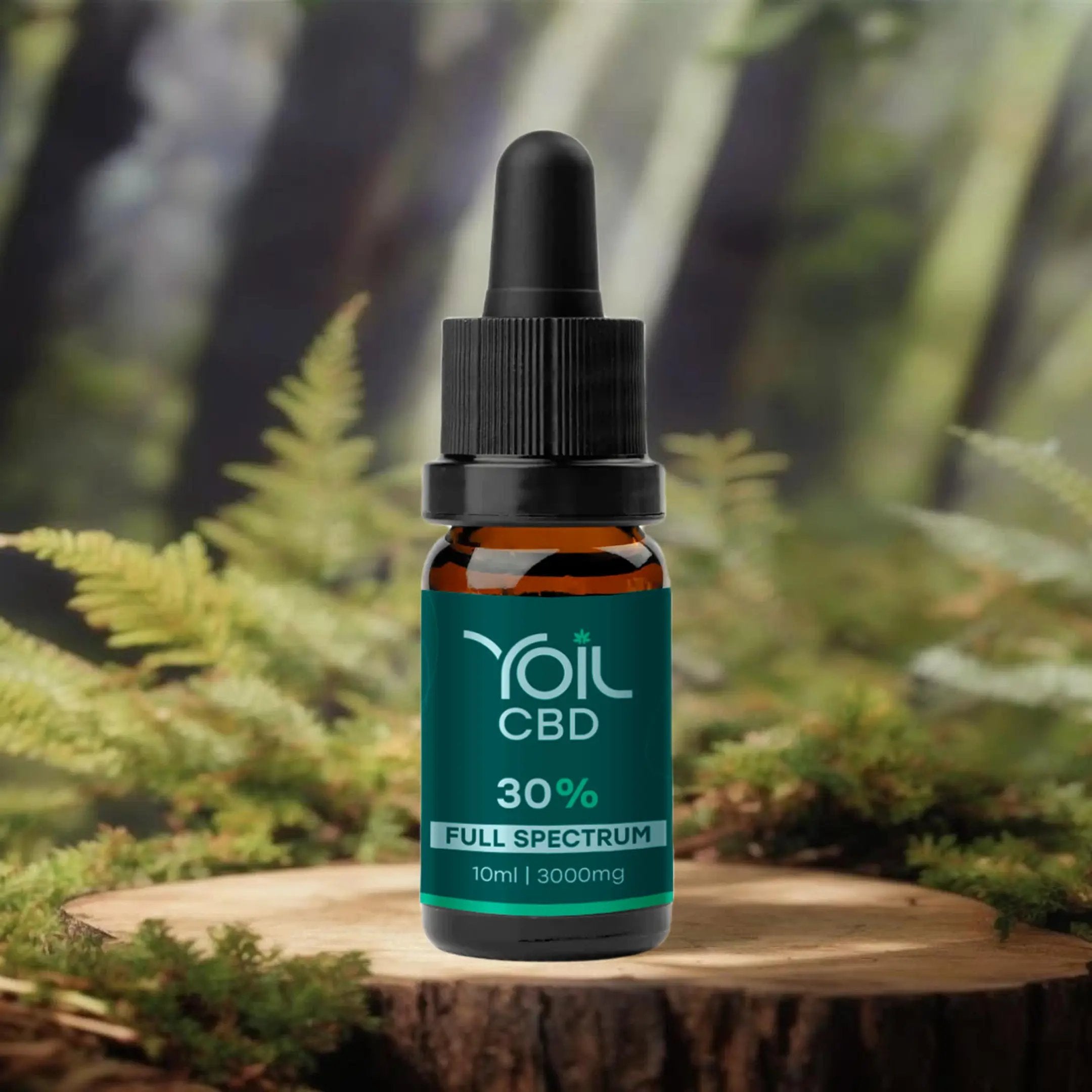
Our Yoil CBD oil is one of the purest and most organic oils on the European market 
Observed Benefits, Safety, and Clinical Profile
One of the appeals of CBD in the context of pain is its relatively favorable safety profile. Unlike THC, CBD does not produce significant psychoactive effects or a euphoric "high"; on the contrary, initial clinical studies indicate that it has a good tolerability profile even at high doses, with mild side effects such as drowsiness, dry mouth, or diarrhea in some cases. Furthermore, it does not appear to induce dependence or risk of abuse; a study in recreational drug users confirmed that CBD shows no appreciable addictive potential or positive reinforcement. This safety has allowed it to be studied in vulnerable populations (elderly with chronic pain, patients on multiple medications) without findings of serious toxicity, although the possibility of drug interactions should always be considered. CBD is metabolized by hepatic enzymes (CYP3A4, CYP2C19, among others), so it can raise levels of medications that use these pathways (e.g., anticoagulants like warfarin or anticonvulsants), requiring monitoring.
As for observed therapeutic benefits, summarized from current evidence:
-
Relief of moderate pain: Several studies show that CBD achieves modest but significant pain reductions in difficult chronic conditions (neuropathies, osteoarthritis, refractory pain). For example, it improved pain scores by approximately 30% in thumb osteoarthritis and peripheral neuropathy compared to placebo, which is clinically relevant. These levels of relief are comparable to those obtained with first-line drugs in these conditions, but with the advantage of better tolerability. However, it is important to emphasize that the analgesic effect of CBD tends to be partial; it rarely eliminates pain completely, but rather is associated with modest pain reductions (e.g., 1-2 points on a 0-10 scale). This is consistent with previous meta-analyses on medicinal cannabis that found only small or very small improvements in pain on average. Therefore, CBD should not be presented as a "miracle cure" for pain, but as an additional tool that can provide additional relief in certain patients.
-
Anti-inflammatory effect and functional improvement: In addition to reducing pain perception, CBD has been shown to decrease inflammation in arthritic contexts. For example, in canine osteoarthritic joints, a reduction in inflammatory cells and cytokines was detected after CBD treatment. In humans, osteoarthritis patients who used CBD reported less swelling and greater range of motion. This combination of analgesia + anti-inflammation often leads to an improvement in function: patients can walk more, sleep better, or perform daily activities with greater ease. Some studies also noted improvements in secondary symptoms, such as sleep quality and anxiety, which is beneficial since chronic pain is often accompanied by sleep and affective disorders, and CBD, due to its anxiolytic/mild sedative properties, can contribute to addressing them comprehensively.
-
Reduction in opioid and other analgesic consumption: An important finding, especially in the current opioid crisis, is the potential opioid-sparing effect of CBD. In the Capano 2020 study, more than half of chronic pain patients reduced their opioid dose when adding CBD, without worsening pain. Other reports have described similar cases. This suggests that CBD can allow pain control with lower opioid doses, thereby reducing their risks (dependence, respiratory depression, constipation). Although confirmatory controlled trials are needed, this signal of an adjunctive effect is one of the most outstanding benefits of CBD at a public health level. Similarly, some patients have been able to replace chronic NSAID use (with their gastrointestinal risks) with CBD for the management of mild arthritis, obtaining similar relief without reported gastric erosions.
-
Use in patients with contraindications to other drugs: Given its safety profile, CBD offers an alternative for patients who cannot tolerate standard analgesics. For example, elderly people with comorbidities who cannot take NSAIDs due to cardiovascular or renal risk, or who are sensitive to the cognitive effects of opioids or gabapentinoids, could try CBD under medical supervision. A particular case was a pilot study in patients with chronic pain after renal transplant, where the use of CBD (50-150 mg/day) improved pain in 6 out of 7 patients without affecting graft function. Although very preliminary, it indicates that CBD could be an option in special populations (immunosuppressed, elderly) where other analgesics pose a risk.
In general, the benefits of CBD in pain treatment include multimodal analgesia, anti-inflammatory effect, functional improvement, good tolerance, and the potential to reduce the need for other more dangerous analgesics. This positions it as a valuable complementary treatment in certain contexts. However, it is crucial to balance these promises with the current limitations and controversies, which are detailed below.
We thank our customers for the excellent reviews

Bibliography
Below is a list of the scientific references mentioned in the article, along with their respective links for consultation and verification.
-
Capano, A., Weaver, R., & Burkman, E. (2020). Evaluation of the effects of CBD hemp extract on opioid use and quality of life indicators in chronic pain patients: a prospective cohort study. Postgraduate Medicine, 132(1), 56-61.
-
Verrico, C. D., Wesson, S., Konduri, V., Hofferek, C. J., Vazquez-Perez, J., Blair, E., Dunner, K., Jr, Salimpour, P., Decker, W. K., & Halpert, M. M. (2020). A randomized, double-blind, placebo-controlled study of daily cannabidiol for the treatment of canine osteoarthritis pain. Pain, 161(9), 2191–2202.
-
Bebee, B., Taylor, D. M., Bourke, E., Pandy, S., Soukiasian, H., & Winstone, A. (2021). The CANBACK trial: a randomised, controlled clinical trial of oral cannabidiol for people presenting to the emergency department with acute low back pain. The Medical Journal of Australia, 214(8), 370–375.
-
Heineman, T., Weiss, N., Lerer, B., & Hochberg, U. (2022). Efficacy of Topical Cannabidiol for the Treatment of Thumb Basal Joint Arthritis. The Journal of Hand Surgery, 47(11), 1121.e1-1121.e8.
-
Walczyńska-Dragon, K., Kopańska, M., & Nitecka-Buchta, A. (2024). The Effect of 5% and 10% Cannabidiol-Containing Gels on the Alleviation of Temporomandibular Disorders-Related Pain: A Randomized, Double-Blind, Placebo-Controlled Study. Journal of Clinical Medicine, 13(4), 1018.
-
Alaia, M. J., et al. (2024). Cannabidiol as a supplement for pain and functional outcomes after arthroscopic rotator cuff repair: a prospective, randomized, double-blinded, placebo-controlled study. The American Journal of Sports Medicine, 52(2), 370-377.
-
Urits, I., Gress, K., Charipova, K., Habib, K., Lee, D., Lee, C., Jung, J. W., Zhou, R., Amgalan, A., Wesp, B., & Viswanath, O. (2020). Use of cannabidiol (CBD) for the treatment of chronic pain. Best Practice & Research. Clinical Anaesthesiology, 34(3), 463–477.






%0AFrom%202020%20to%20the%20present,%20several%20relevant%20clinical%20studies%20exploring%20the%20use%20of%20CBD%20for%20pain%20have%20been%20conducted.%20Below%20is%20a%20summary%20of%20...)