
Seeing is Believing: CBD Myths and Realities
Exploring the world of CBD reveals a mix of scientific findings, evolving legal landscapes, and widespread myths.
What is the best way to consume CBD? According to science
In an article in the newspaper El País, titled "How does Cannabis work?" there are 2 European projects seeking the keys to its therapeutic use.
Note these details: "Once the active ingredient of a CBD product purchased in an establishment is ingested, only a small amount (barely 6%) of it enters the bloodstream and becomes available to the brain. Consequently, it is necessary to consume large quantities of CBD for it to take effect.
A two-year project at the University of Minho, in Braga (Portugal), seeks to clarify the metabolic processes that influence the amount of CBD the body can use after consumption. "There is some variability among people, but the causes are not clear," said Dr. Renata Vardanega, an expert in Bioengineering and coordinator of the EU-funded CBDHIGHBIO project, which will conclude in October 2024.
Vardanega and her team are studying the factors that determine the amount of the active ingredient absorbed after consuming CBD. Does it depend, for example, on what else the person has eaten or drunk? They are also working to improve CBD absorption by pairing it with a long-chain fatty acid during administration. This method diverts the absorption route to prevent CBD from being metabolized by the liver.
The goal of another research line is to find a way to improve CBD absorption by combining it with piperine, a compound obtained from black pepper. Piperine is a very effective bio-enhancer, meaning it can increase the bioavailability of another substance, explains Professor Antonio Vicente, a bioengineer on the project."
But there's more...
Here's a concise summary of some key aspects and secrets surrounding CBD:
-
Scientifically Proven Benefits: Contrary to common myths, the health benefits of CBD are recognized. The FDA has approved Epidiolex, a CBD-based medication, to treat a specific form of epilepsy, marking significant recognition of CBD's therapeutic potential.
-
Cannabis and CBD Research: Despite legal barriers, there has been significant research on CBD, including studies on its effectiveness in treating conditions such as glioblastoma, ulcerative colitis, and colon cancer. These studies show CBD's potential in medical applications.
-
Debunking Common Myths:
- CBD Legality and Safety: Although CBD's legal status varies by location, it is generally recognized as safe by the World Health Organization, provided it is used in recommended doses.
- Addiction: CBD is not considered addictive, according to WHO reports, which state that there is no evidence of abuse or dependence potential.
- Psychoactive Effects: A common misconception is that CBD is psychoactive like THC. However, hemp-derived CBD contains less than 0.3% THC, not enough to produce a psychoactive effect.
-
Choosing Quality CBD Products: It is crucial to select high-quality CBD products to ensure a safe and effective experience (listen to the interview with the CBD doctor). This involves looking at the type of CBD used, the extraction method, and the results of independent laboratory tests.
-
CBD for Enhanced Well-being: Adopting CBD with informed decisions can potentially improve physical and mental health. However, consultation with healthcare professionals is recommended, especially for those on medication or with pre-existing conditions.
-
Navigating Myths and Realities: Understanding the difference between CBD myths and facts can help consumers make informed decisions. For example, the myth that CBD converts to THC in the stomach has been debunked, and the idea that CBD is universally sedating is incorrect; it can help with sleep by alleviating pain and anxiety rather than through direct sedative effects.
As CBD continues to gain popularity for its health benefits, it's important to navigate the landscape with accurate information and a critical eye to distinguish scientifically backed facts from myths. Always ensure you use CBD products responsibly and legally, in line with local regulations and guidelines.
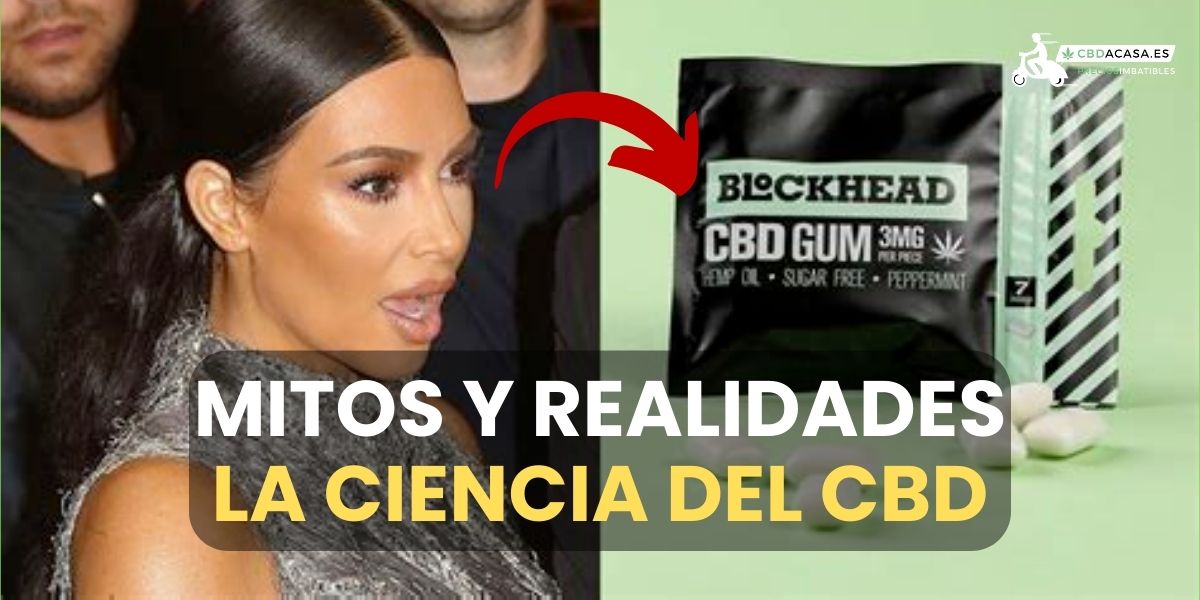
CBD chewing gum already exists if you want to jump on Kim Kardashian's latest trend
CBD is a very popular product nowadays; it's used for everything from a mid-morning snack to nighttime skincare. But if you're not convinced to swap your cow's milk for a hemp bar or if you already have a beauty routine that works for you, there's a simpler option: CBD chewing gum. Yes, you read that right.
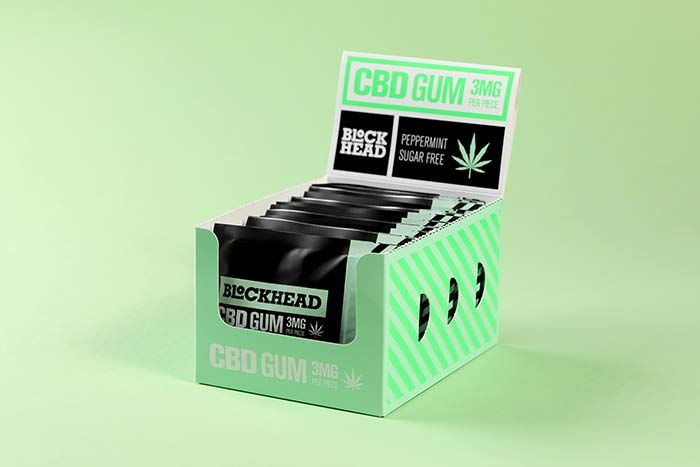
Would *you* try CBD gum?
With the #cbd hashtag on Instagram having over 8 million posts and Kim Kardashian hosting a CBD-themed baby shower (and as we all know, when Kim K is involved, everyone is involved), it seems the trend isn't going anywhere. CBD chewing gum, launched by Blockhead, has dubbed itself one of the UK's "most innovative confectionery brands," and the gum allows you to try the trend in small doses. Each piece contains 3mg of CBD, and of course, you can take more if you wish. Plus, it's aspartame-free and mint-flavored, so we don't know about chewing, but we're heading straight to Holland & Barrett.