

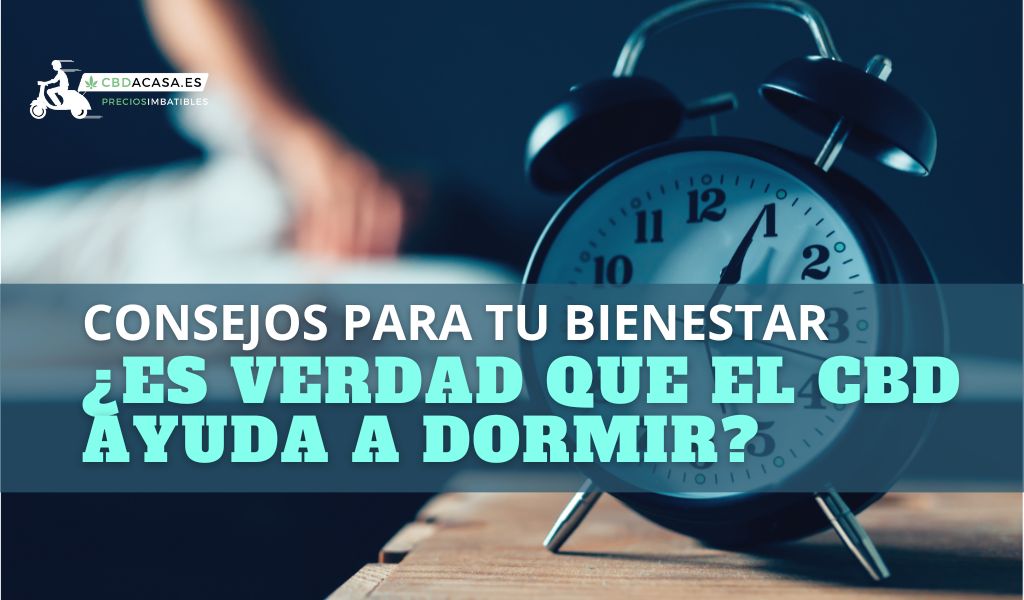
Does CBD really help with sleep?
Cannabidiol (CBD) is a natural compound extracted from the cannabis plant that offers multiple health benefits, including improving sleep quality. In this post, we will explain whether it's true and why science supports CBD for sleep, providing scientific reports with their links.
I will also tell you under what conditions CBD DOES NOT WORK.
Sleep is a vital function that allows us to regain energy, regulate the body, and maintain psychological balance. However, many people suffer from insomnia or sleep disorders that affect their well-being and performance. Some of the most common causes include stress, anxiety, pain, or disruptions to the circadian rhythm.
Why isn't the population sleeping well?

Approximately 10% of the adult population suffers from an insomnia disorder, while another 20% experience occasional insomnia symptoms. Insomnia tends to be more prevalent in women, older adults, and individuals experiencing socioeconomic difficulties1.
Up to 35% of adults are affected by insomnia. The most common reasons for sleep problems include:
-
Stress: This can arise from work, school, social relationships, or exposure to traumatic events, leading to a state of hyperarousal that makes sleep difficult2.
-
Irregular sleep schedules: Disruptions to the body's circadian rhythm due to factors like jet lag or shift work can disturb normal sleep patterns2.
-
Lifestyle factors: Unhealthy habits such as excessive stimulation before bed, late naps, irregular sleep schedules, and using the bed for activities other than sleep can contribute to insomnia2.
-
Diet: Consuming heavy meals, spicy foods, caffeine, nicotine, and alcohol can interfere with the sleep cycle2.
-
Mental health disorders: Anxiety, depression, and bipolar disorder are frequently linked to sleep disturbances, with an estimated 40% of people with insomnia also having a mental health disorder2.
These factors can interact and reinforce each other, exacerbating sleep difficulties. It's also important to note that insomnia can be a chronic, persistent problem, highlighting its importance as a public health issue1.
Can CBD really help with sleep?

CBD acts on the endocannabinoid system, a network of receptors and molecules that regulate various bodily functions, including sleep. CBD interacts with CB1 and CB2 receptors, found in the brain and nervous system, and modulates the activity of neurotransmitters involved in the sleep-wake cycle, such as serotonin, GABA, or melatonin.
According to various scientific studies, CBD has anxiolytic, anti-inflammatory, analgesic, and neuroprotective properties that can help improve sleep in different ways:
- CBD reduces anxiety and rumination that can make it difficult to fall asleep. A 2019 study with 72 adults suffering from anxiety and sleep problems found that CBD doses between 25 and 75 mg improved sleep in 66.7% of participants.
- CBD provides general relaxation and sedation that facilitates falling asleep. A 2018 study with 409 people with insomnia found that CBD improved sleep quality by 4.5%. Many clients even use CBD for meditation.
- CBD reduces pain and discomfort that can interrupt sleep. A 2018 study with 29 people with fibromyalgia found that CBD reduced pain and improved sleep by 13%. It also showed results with women during their periods, as you can see in this article.
- CBD regulates circadian rhythms and non-REM sleep cycles. A 2017 study with mice found that CBD increased the duration of deep sleep and decreased the duration of light sleep.
These are just a few examples of the scientific evidence supporting the use of CBD for sleep. However, it's important to remember that each person is different, and the effects of CBD can vary depending on the dose, method of administration, genetics, and other factors. Therefore, it's recommended to consult a doctor before using CBD and to start with low doses, gradually increasing until the most suitable dose is found for each case.
CBD is a natural and safe alternative to improve sleep without causing side effects or dependence. If you want to experience its benefits, you can find high-quality CBD oils, flowers, creams, and other CBD products in our online store.

We even have incredible combinations like this one with CBD with Green Tea for energy.
Under what conditions is CBD not as effective?
CBD (cannabidiol) is a compound extracted from the cannabis plant with therapeutic properties, including improving sleep quality. However, CBD is not a magic solution that can resolve all problems related to insomnia or nighttime rest. Several factors can influence the effectiveness of CBD in helping people sleep, and these are related to each individual's lifestyle habits and health status.
Some of these factors are:
The dose and timing of CBD consumption.
There isn't a single, universal CBD dose that works for everyone, as each person has a different sensitivity and response to the cannabinoid. Furthermore, the effect of CBD can vary depending on the time of day it is consumed, as it can have a stimulating or relaxing effect depending on the hour. Therefore, it is important to adjust the dose and timing of CBD consumption according to each person's needs and goals, and to consult with a medical professional before starting to use it.
The quality and purity of the CBD product.
Not all CBD products sold on the market have the same quality or composition. At CBDACASA, we ensure the quality of our products.
Some may contain traces of THC (tetrahydrocannabinol), the psychoactive compound in cannabis, which can interfere with sleep or cause unwanted side effects. Others may be adulterated with chemicals or contaminants that can affect health or CBD performance. Therefore, it is essential to choose a trustworthy CBD product that has a laboratory analysis certificate guaranteeing its purity and concentration.
The presence of other medical or psychological conditions.
CBD can interact with some medications or with some diseases that can alter sleep, such as anxiety, depression, chronic pain, stress, restless legs syndrome, sleep apnea, or gastroesophageal reflux.
In these cases, CBD can be beneficial or harmful depending on the situation and the treatment being followed. Therefore, it is essential to inform your doctor about CBD use and follow their instructions.
Sleep hygiene habits.
CBD can help relax the body and mind, but it cannot compensate for poor sleep hygiene habits that hinder adequate rest.
Some of these habits include: going to bed and waking up at irregular hours, using electronic devices before bed, being exposed to too much light or noise in the bedroom, consuming caffeine, alcohol or tobacco at night, doing intense exercise before bed, or eating dinner too late or too heavily.
These habits can disrupt the circadian rhythm, which is the biological clock that regulates sleep-wake cycles, and lead to insomnia or daytime sleepiness. Therefore, it is necessary to adopt healthy habits that promote restorative sleep and complement the effect of CBD.
Suggestions for administering CBD?
CBD can help you fall asleep by relieving anxiety and pain. Doctors suggest taking 25 mg before bed and increasing the dose as needed. There are three ways to use CBD oil for sleep:
- Take it before going to bed.
- Take drops throughout the day.
- CBD flowers for sleep, which are sold for aromatic and decorative use according to Spanish Law.
In summary, CBD can be an ally for improving sleep quality, but it cannot replace good lifestyle habits or proper medical diagnosis and treatment. Each person should find their optimal dose and timing for CBD consumption, choose a quality product, and consult their doctor before using it.
Sources:
: Shannon S., Lewis N., Lee H., Hughes S. (2019). Cannabidiol in Anxiety and Sleep: A Large Case Series. The Permanente Journal, 23:18-041. https://www.ncbi.nlm.nih.gov/pmc/articles/PMC6326553/
: Vigil J.M., Stith S.S., Adams I.M., Reeve A.P. (2018). Associations between medical cannabis and prescription opioid use in chronic pain patients: A Preliminary Cohort Study. PLoS ONE, 13(11): e0206923. https://journals.plos.org/plosone/article?id=10.1371/journal.pone.0206923
: Habib G., Artul S. (2018). Medical Cannabis for the Treatment of Fibromyalgia. Journal of Clinical Rheumatology: Practical Reports on Rheumatic & Musculoskeletal Diseases, 24(5):255-258. https://pubmed.ncbi.nlm.nih.gov/29461346/
: Murillo-Rodríguez E., Millán-Aldaco D., Palomero-Rivero M., Mechoulam R., Drucker-Colín R. (2007). Cannabidiol, a constituent of Cannabis sativa, modulates sleep in rats. FEBS Letters, 581(17):4337-4345. https://pubmed.ncbi.nlm.nih.gov/17712817/







%20is%20a%20natural%20compound%20extracted%20from%20the%20cannabis%20plant%20that%20offers%20multiple%20health%20benefits,%20including%20improving%20sleep%20quality.%20In%20this%20post,%20we%20will%20explain%20whether%20it's%20true%20an...)