
CBG Validated as a New and Potent Antibiotic: Discoveries of 2025 Part I
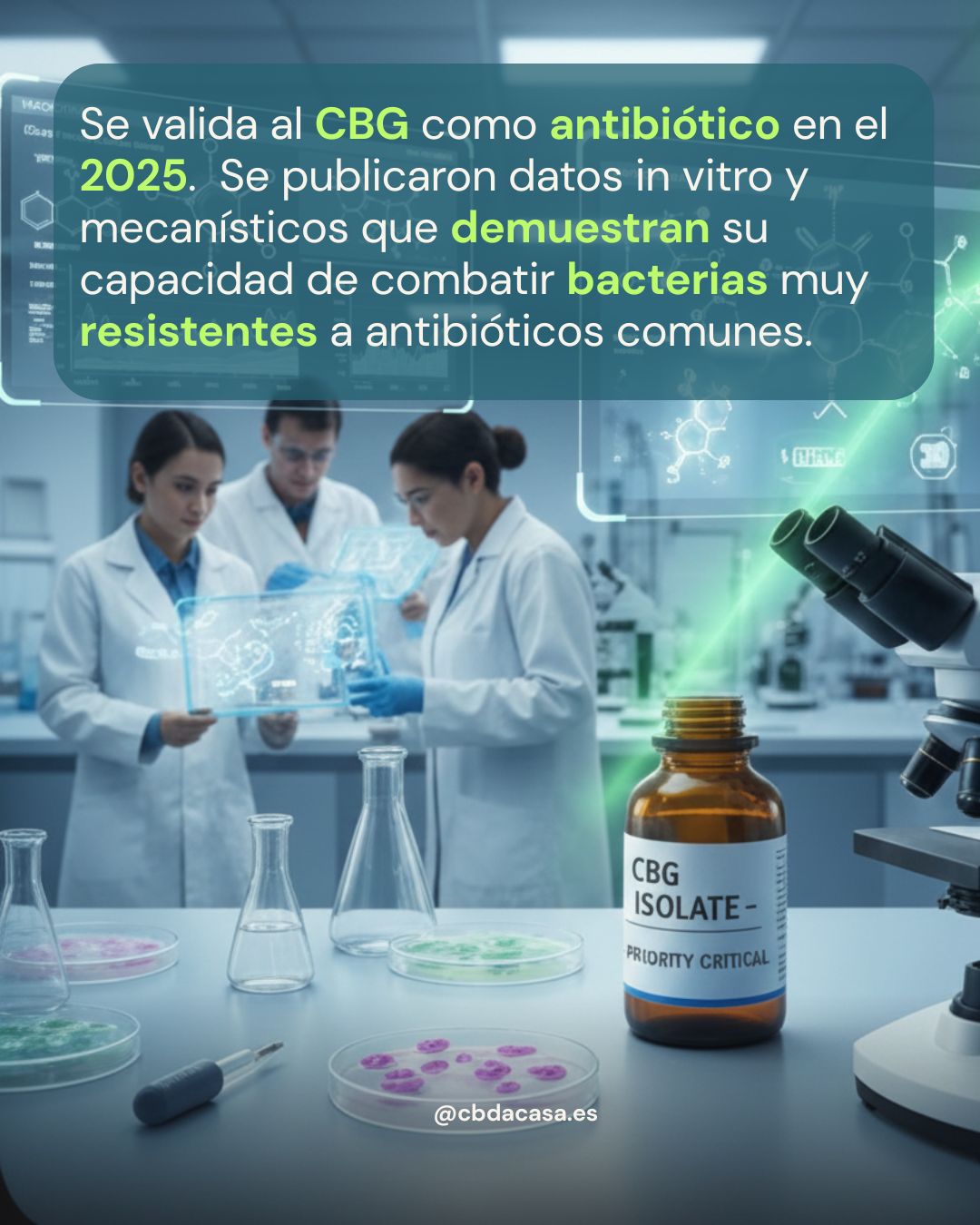
In a world where antibiotic resistance looms like an inescapable shadow, forcing us to seek new guardians of health, the year 2025 brought us a revelation from the realm of cannabinoids: Cannabigerol (CBG). This compound, often overshadowed by CBD, has proven to be an anti-infective agent with such unique potency and mechanism of action that it positions it as a "critical priority" candidate in modern pharmaceuticals.

The New Warrior in the Bacterial Battle
The research focused on a group of bacteria known as Gram-positive pathogens. Of particular interest was Methicillin-resistant Staphylococcus aureus (MRSA), a very dangerous multidrug-resistant bacterium. MRSA is one of the leading causes of hospital-acquired infections (nosocomial infections). It is a difficult adversary to combat because it has developed resistance to many commonly used antibiotics, making its treatment extremely difficult.
Against this titan, CBG emerged as a fast-acting warrior. While other active cannabinoids required hours to eradicate bacteria in the laboratory, CBG executed its bactericidal mission in just 60 minutes. Its potency is comparable to that of its siblings, but its speed of response is the first indication of a superior combat mechanism.
The Secret of CBG: Biofilm Destruction
CBG's most significant breakthrough lies not only in killing individual bacteria but in dismantling their defense structure.
Imagine biofilm as a cement castle that bacteria build around their community to protect themselves. This viscous fortress is the main reason why chronic infections fail with traditional antibiotics, which simply bounce off the walls.
CBG proved to be the most effective demolition engineer of all cannabinoids examined. Acting at very low concentrations, it not only inhibits the construction of new biofilm castles but, critically, eradicates preformed biofilms and the most stubborn and persistent bacteria hiding within. This capacity for penetration and destruction differentiates it from commonly used antibiotics (such as gentamicin or vancomycin), which are ineffective against these "stationary" cells.

The Dual Mechanism: Physical Attack and Communication Silence
How does CBG achieve this feat? Its strategy is twofold:
- Membrane Disruption (The Physical Ram): CBG works like a molecular ram, striking and disrupting the bacterial plasma membrane. By destabilizing this protective wall, Gram-positive cells become vulnerable and disintegrate.
- Anti-Quorum Sensing (Command Sabotage): CBG interferes with quorum sensing, the "group communication" system that bacteria use to coordinate biofilm formation. It's like cutting the enemy army's communication lines: without coordination, the castle is neither built nor defended.
A hopeful finding, worthy of sustainable treatment, is that CBG did not induce resistance development in MRSA. This suggests that it does not force bacteria to evolve, offering a more durable treatment pathway than traditional antibiotics.
The Research Horizon
Despite its remarkable success against Gram-positive pathogens, CBG is not a universal solution; it proved inactive against Gram-negative bacteria (such as E. coli), which limits its spectrum of action. Furthermore, preliminary toxicity studies in larval models indicate that rigorous safety evaluation is needed before widespread use.
However, CBG's potential is undeniable. Its dual mechanism of action and its ability to dismantle the biofilm structure have made it a high-level drug candidate. Future research is already underway, focusing on the development of optimized CBG analogs and the search for its use in topical and systemic treatments to counteract the global crisis of antimicrobial resistance.
CBG is shaping up to be a key piece in our arsenal against superbugs, reminding us that the most potent solutions often come from the most unexpected corners of nature.
Sources used
The anti-biofilm activity of cannabinoids against methicillin-resistant Staphylococcus aureus
The anti-biofilm activity of cannabinoids against methicillin-resistant Staphylococcus aureus
Leveraging Cannabinoids as Antimicrobials
Exploring the Potential of Phytocannabinoids Against Multidrug-Resistant Bacteria
Antimicrobial Potential of Cannabinoids: A Scoping Review of the Past 5 Years
The CBD hash cream is on sale this week, and it's a combination of 34% CBD with CBG. We'll leave it here in case you want to try this powerful blend and start exploring the world of CBG.

Thank you for your reviews