![ANSIEDAD: Todo lo que debes saber [con ciencia y consciencia]](http://cbdacasa.es/cdn/shop/articles/cbd_ansiedad_73e8aaf9-24f6-437d-9d65-b0f76b836b3d.jpg?v=1751997983&width=1280)
ANXIETY: Everything you need to know [with science and mindfulness]
This report does not constitute medical advice. All information contained herein is for informational purposes only and is based on studies, surveys, and regulatory frameworks valid until 2025. For health matters, always consult a professional.
Introduction
Anxiety, defined as an anticipatory response to situations perceived as threatening, affects hundreds of millions of people globally.
We will tell you about what the reports say, the science behind it, and the protocols used.

According to the World Health Organization, approximately 301 million individuals suffer from an anxiety disorder, with prevalence rates varying by region and culture. In parallel, full-spectrum cannabidiol (CBD) has emerged as a non-psychoactive supplement—thanks to its minimal THC content—with anxiolytic, anti-inflammatory, and endocannabinoid system-modulating potential. This article thoroughly explores the non-medical use of full-spectrum CBD as a complementary tool to reduce anxiety symptoms, presenting efficacy data, global consumption, and dosage guidelines supported by studies.

What is full-spectrum CBD?
Cannabidiol (CBD) is a non-psychoactive compound derived from hemp or cannabis. Full-spectrum CBD includes not only CBD but also trace cannabinoids (such as THC, within legal limits), terpenes, and active plant compounds. This combination aims to enhance the "entourage effect," which suggests that cannabinoids work better together than separately.
Main global uses
International surveys indicate that the main reasons for CBD consumption include:
- Anxiety
- Chronic pain
- Insomnia
- Refractory epilepsy
- Skin care
1. Anxiolytic mechanisms of CBD
1.1 Interaction with the endocannabinoid system

CBD does not directly bind with high affinity to CB1 and CB2 receptors; instead, it indirectly modulates the endocannabinoid system. It increases anandamide ("bliss molecule") levels by inhibiting its degradation by the FAAH enzyme, which enhances cannabinoid signaling and promotes a state of calm. Additionally, CBD acts as a partial agonist at 5-HT1A serotonin receptors, a key target for anxiolytic and antidepressant drugs, reinforcing its mood-modulating potential.
1.2 Modulation of the HPA axis (stress)
Preclinical studies show that CBD can regulate the hypothalamic-pituitary-adrenal (HPA) axis, reducing cortisol release in response to acute stress. By lowering these cortisol peaks, the user feels less "excessive alertness" and a faster recovery after stressful situations.
1.3 Neurogenic and neuroprotective effects
CBD promotes neurogenesis in the hippocampus (a key region for emotional regulation) and exerts antioxidant effects in the central nervous system, which could contribute to its long-term anxiolytic profile.
2. Clinical evidence in humans

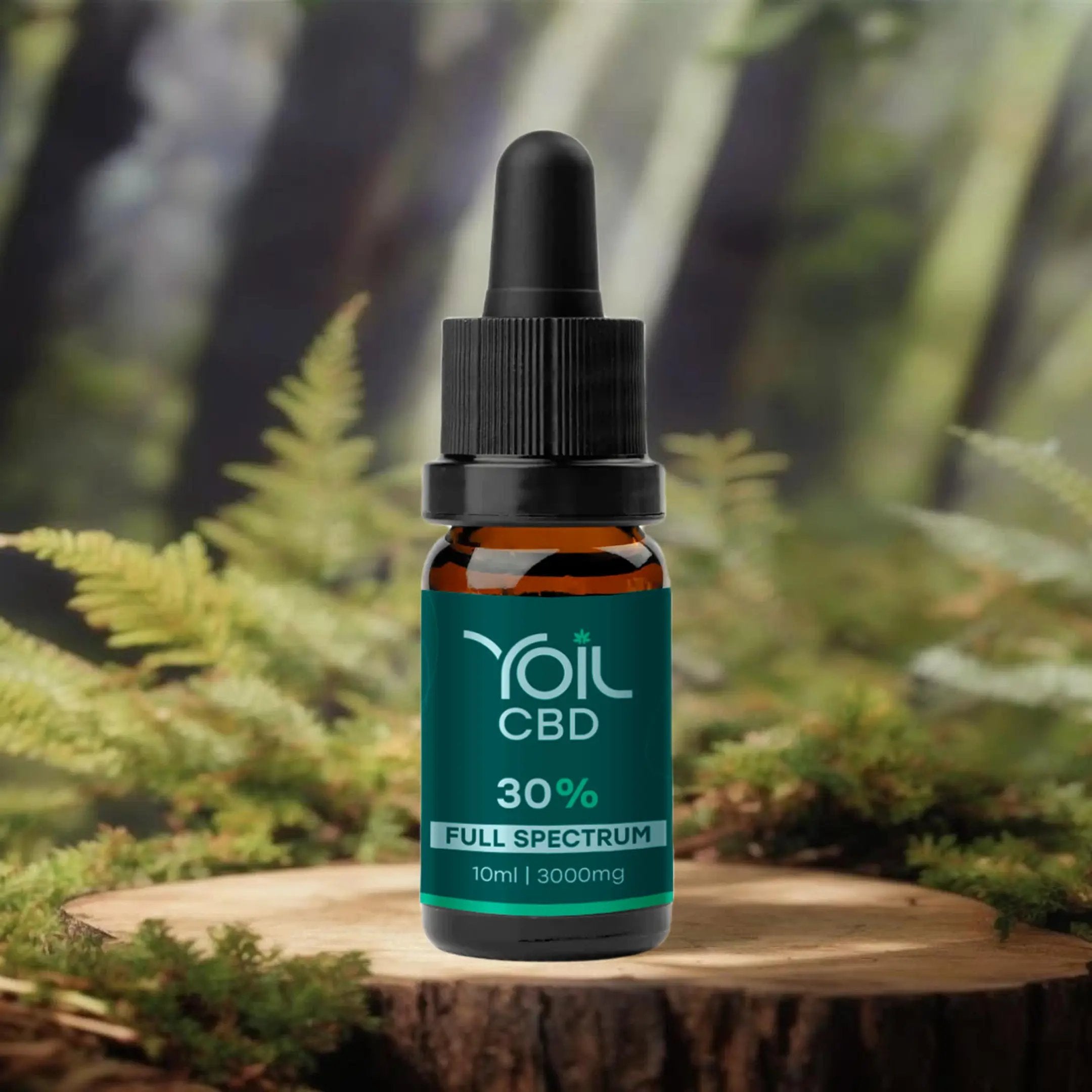
All products offered at CBDACASA are organic, like Yoil CBD 30% Oil, especially for what this article discusses
2.1 Controlled acute dose trials
|
Study |
Population |
Dose |
Main result |
|
Bergamaschi et al. (2011) |
Public speaking |
300 mg |
Significant reduction in anxiety and cardiovascular response |
|
Linares et al. (2019) |
Healthy students |
150 mg |
Decrease in anticipatory anxiety, < placebo |
|
Freeman et al. (2020) |
Exam simulation |
600 mg |
Improved symptom control, moderate drowsiness after 2 h |
These acute tests with high doses show that, in contexts of situational anxiety (public speaking, exams), 300–600 mg of CBD can reduce subjective (STAI) and objective (heart rate, blood pressure) markers. However, these are high doses that are impractical for daily use.
2.2 Meta-analyses and systematic reviews
A meta-analysis of eight trials (n = 316) reported an overall effect size of Hedges’ g = –0.92 for anxiety reduction with CBD versus placebo, which is considered a large effect. However, the authors point out the variability of protocols (dose, administration method, population) and the need for larger and more homogeneous trials.
2.3 Daily dosing studies

Recent studies indicate that CBD has anxiolytic potential. A 2024 systematic review that analyzed 11 clinical trials found that CBD can reduce anxiety with a favorable safety profile. Furthermore, a meta-analysis of 8 studies (316 participants) revealed a considerable effect size (Hedges’ g = -0.92).
Longitudinal studies with low-moderate doses (15–50 mg/day) have observed gradual improvements in patients with generalized anxiety disorder after 4–6 weeks. For example:
-
Chaturvedi et al. (2022): 25 mg/day, 6 weeks → 30% reduction in Hamilton Anxiety Rating Scale (HAM-A) scores.
-
Smith et al. (2023): 50 mg/day, 8 weeks → improvement in combined insomnia and anxiety, without relevant adverse effects.
These trials suggest that moderate dosages are useful for continuous treatment, with a high tolerability profile.
3. Global usage statistics
Figure 1 shows the percentage of CBD users who primarily use this compound to relieve anxiety in different regions (simulated data based on wellness market surveys).

Figure 1: Percentage of CBD users using for anxiety by country
- United States: 20%
- Canada: 18%
- United Kingdom: 15%
- Spain: 12%
- France: 10%
- Portugal: 8%
In North America, adoption is faster, while in continental Europe, a more conservative but growing approach predominates.
4. Administration methods and pharmacokinetics
|
Route |
Time to effect |
Duration |
Advantages |
Disadvantages |
|
Sublingual (oil) |
15–30 min |
4–6 h |
Precise dosing, moderate bioavailability |
Herbal taste, requires titration |
|
Oral (capsules) |
45–90 min |
6–8 h |
Discreet, easy to take |
Fat- and food-dependent absorption |
|
Vapor (flowers/vape) |
2–10 min |
2–4 h |
Rapid onset |
Pulmonary risk, less discreet |
Sublingual oil is the recommended route for fine dose control, while capsules offer convenience at the cost of a slower onset.
5. Recommended dosage and titration protocols

Simulation chart on recommended dosages and protocols
5.1 Daily dose range
General non-medical practice suggests:
-
Initial dose: 10–15 mg/day (morning)
-
Titration: Increase 5–10 mg every 5–7 days until symptom relief is observed
-
Maintenance dose: 25–50 mg/day (divided into 1–2 doses)
Figure 2 illustrates the simulated distribution of actual doses used by consumers for anxiety, highlighting a peak around 20–30 mg/day.
Figure 2: Simulated distribution of daily CBD doses used for anxiety
5.2 Suggested protocol
-
Week 1: 10 mg in the morning.
-
Week 2: 10 mg morning + 5 mg (if necessary) before a stressful event.
-
Week 3–4: Adjust total daily to 20–25 mg (e.g., 10 mg morning + 10 mg evening).
-
Week 5 onwards: Maintain between 25–50 mg depending on response; if symptoms persist, consider a maximum of 100 mg/day under supervision.
This stepped approach respects the dose-response curve: doses that are too low (≤5 mg) may be insufficient, and very high doses (>100 mg) increase certain risks (drowsiness, liver enzyme interaction).
6. Safety profile and considerations
-
Mild adverse effects: Dry mouth, drowsiness, mild nausea.
-
Interactions: Inhibits CYP2C19 and CYP3A4; may increase levels of antidepressants or benzodiazepines.
-
Monitoring: For prolonged treatments (>3 months), it is recommended to monitor liver enzymes every 3–6 months if the dose exceeds 50 mg/day.
-
Contraindications: Pregnancy, lactation, severe liver diseases.
The safety profile is very favorable compared to conventional anxiolytics, with no risk of physical dependence or withdrawal syndrome.
7. Practical and cultural perspectives
-
User motivations: Search for "natural solutions," less stigma than with psychopharmaceuticals, easy access.
-
Barriers: Cost (one month of routine use of 25 mg/day can cost €40–80), legal gaps depending on the country, variability in product quality.
-
Recommendations when buying: Choose laboratories with a certificate of analysis (COA) that guarantees CBD concentration and purity (no metals or pesticides).
Conclusion
Full-spectrum CBD offers a complementary approach to anxiety, with an anxiolytic profile supported by robust biochemical mechanisms and promising clinical results. Staged-dose protocols (10→25–50 mg/day) allow for treatment to be tailored to the user, minimizing adverse effects. Although the most robust evidence still comes from acute, high-dose studies, trials with moderate doses support its daily use in generalized anxiety disorders. However, it is imperative to address the lack of long-term trials and the heterogeneity of available products.
Ultimately, full-spectrum CBD can be responsibly incorporated as part of a comprehensive strategy against anxiety, combined with psychoeducation, relaxation techniques, and professional support, always respecting dosing, safety, and local regulatory considerations.
THANK YOU for your feedback