
CBD for Anxiety and Stress: What Do the Studies Say?
In our previous article, we demystified what cannabidiol (CBD) is and how it interacts with our body through the endocannabinoid system. Now, we will delve into one of the most discussed and promising applications of CBD: its potential to help with anxiety and stress.
Is CBD really a "natural remedy" for calm? Or is it just another passing fad? The key is to look at what science has to say.
![]() "Why might CBD help with anxiety?"
"Why might CBD help with anxiety?"
Anxiety, in its chronic form, not only affects mood but can also alter the brain's biological functions. Conventional medications, while effective, can have side effects that limit their long-term use. In this context, cannabidiol (CBD) has emerged as an alternative of great interest for research.

Scientific evidence suggests that CBD does not act on a single target, but rather modulates multiple neurobiological systems involved in the regulation of anxiety and fear. Its potential as an anxiolytic (anxiety reducer) is mainly attributed to the following mechanisms:
-
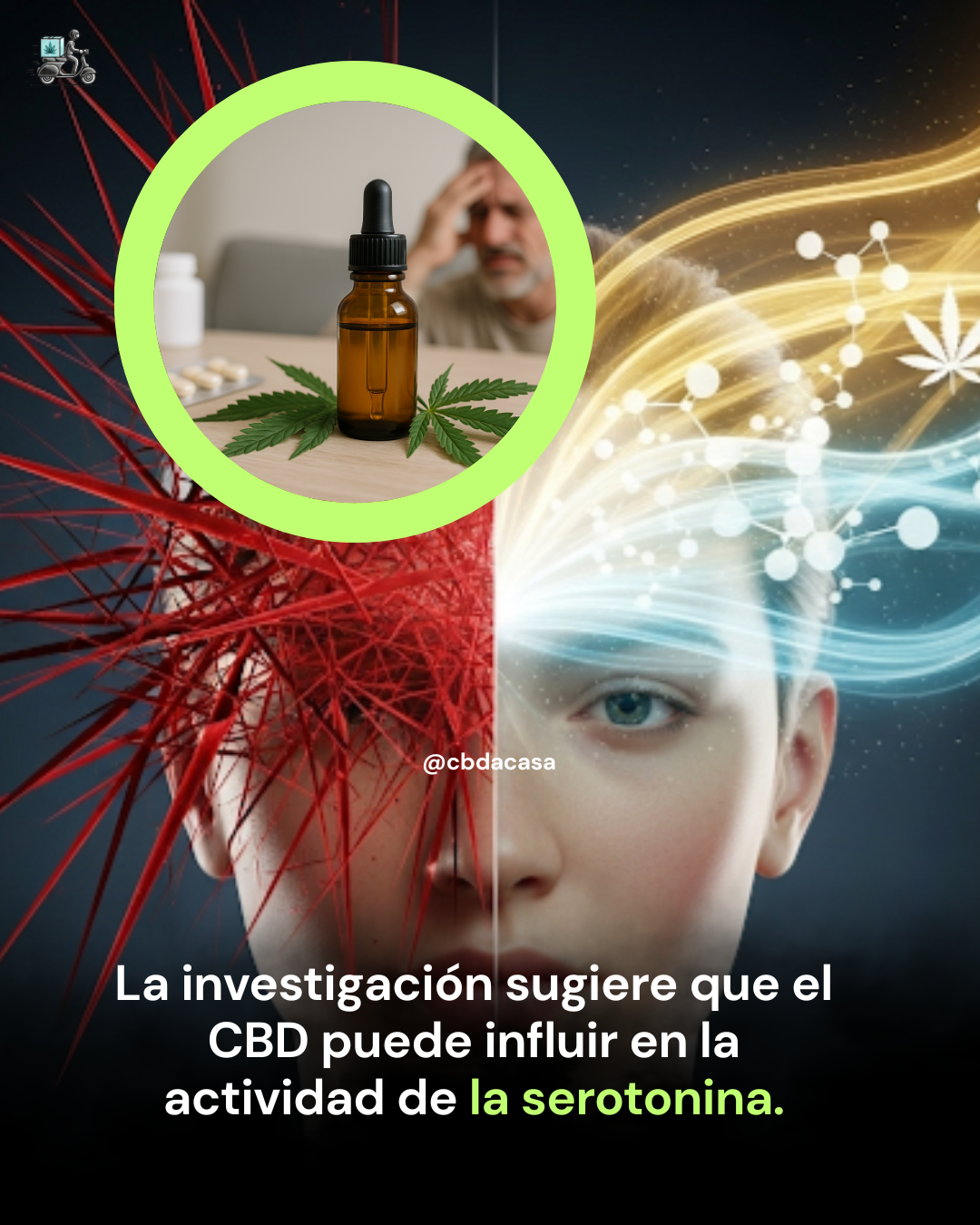
Interaction with serotonin receptors: CBD exerts its primary anxiolytic effect by acting as a partial agonist of the 5-HT1A serotonin receptor. This receptor is a key player in regulating anxiety and mood. Unlike SSRI (Selective Serotonin Reuptake Inhibitor) antidepressants, which block serotonin reuptake, CBD directly activates the receptor, which could produce a calming effect more immediately and without the side effects often associated with traditional medications.
-
Modulation of the Endocannabinoid System (ECS): CBD can influence the function of the ECS, the master system for body balance. CBD has been shown to inhibit the FAAH (fatty acid amide hydrolase) enzyme, which is responsible for breaking down anandamide, a natural endocannabinoid in the body. By maintaining higher levels of anandamide, CBD could enhance its anxiolytic and neuroprotective effects, as this molecule is involved in regulating emotional responses.
-
Impact on brain activity: Neuroimaging studies have observed that CBD can modify activity in brain regions crucial for anxiety. For example, it has been shown to reduce blood flow and activation in the amygdala, an area known as the "fear center," while increasing activity in the prefrontal cortex, a region responsible for decision-making and reasoning. This dual effect suggests that CBD not only suppresses fear responses but also promotes greater cognitive control over emotions.
Evidence from clinical and preclinical studies
-
Social Anxiety Disorder (SAD): A 2011 study, which has become a reference, showed that CBD significantly reduced anxiety in patients with Social Anxiety Disorder (SAD) during a simulated public speaking event. Brain scans confirmed that CBD altered activity in brain areas associated with fear, cognition, and emotion.
-
Post-Traumatic Stress Disorder (PTSD): Preclinical research and some clinical trials have shown that CBD can be effective in reducing PTSD symptoms, helping to decrease anxiety and nightmares, which improves sleep quality in patients.
-
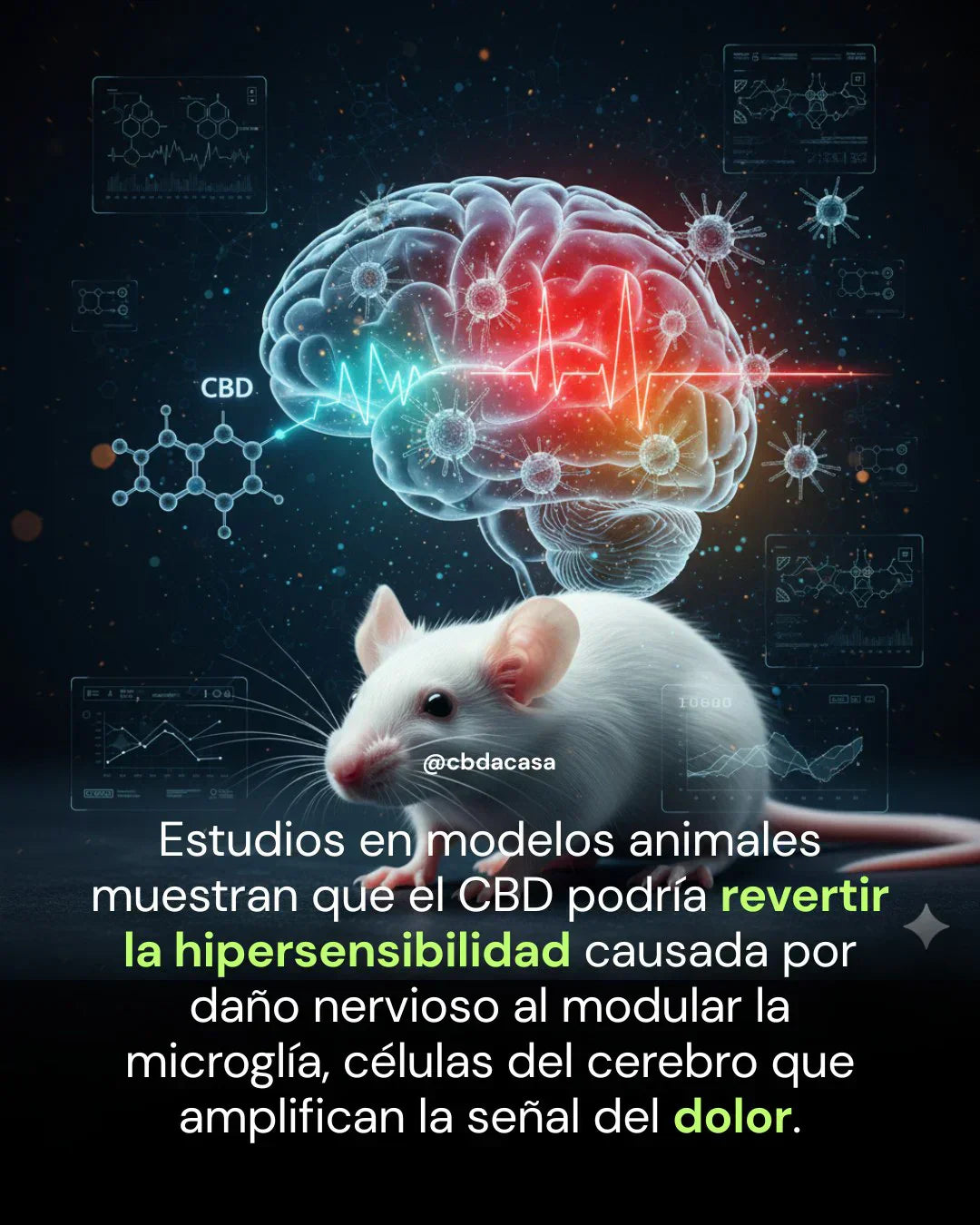
Acute and chronic stress: Research in animal models has confirmed the anxiolytic and antidepressant effect of CBD, showing that it can reduce the stress response and restore balance in behavior under tension.
Dosage and Forms of Use: The key to effectiveness
While the science is promising, dosage is crucial and still under investigation. The amount of CBD needed can vary greatly from person to person, depending on factors such as body weight, individual chemistry, and the severity of symptoms.
An important tip: If you decide to try CBD for anxiety, experts recommend starting with a low dose and gradually adjusting it until you find the desired effect. There is no "magic dose" that works for everyone.

The most common forms of using CBD for anxiety are:
-
Oils and tinctures: Taken sublingually (under the tongue) for faster absorption into the bloodstream. Ideal for quicker relief.
-
Capsules and edibles: They are easy to dose and their effects last longer, although they take longer to kick in.
-
Vaping: Provides the fastest effects, but its long-term safety is still a matter of debate.
Precautions and lack of regulation
It is important to emphasize that the CBD market is not exhaustively regulated in many countries. This means that the quality and purity of products can vary. CBDacasa.com offers you security.
Our recommendation: If you buy CBD products, look for those that have a certificate of analysis (COA) from an independent laboratory. This document guarantees that the product contains what the label says and is free of contaminants such as pesticides or heavy metals.
Until the next article, because we continue "Demystifying CBD one article at a time"
https://cbdacasa.es/
What do you want to know about CBD? We'll answer you!!

Scientific References on CBD and Anxiety
-
Linge, R., et al. (2016). Cannabidiol induces rapid-acting antidepressant-like effects and enhances cortical 5-HT/glutamate neurotransmission: role of 5-HT1A receptors. Neuropharmacology, 105, 345-353.
-
De Mello Schier, A. R., et al. (2014). Antidepressant-like and anxiolytic-like effects of cannabidiol: a review of the literature. CNS & Neurological Disorders-Drug Targets, 13(6), 953-960.
-
Zuardi, A. W., et al. (2011). A review of the psychotropic effects of cannabidiol (CBD). Brazilian Journal of Psychiatry, 33(4), 370-376.
-
Blessing, E. M., et al. (2015). Cannabidiol as a Potential Treatment for Anxiety Disorders. Neurotherapeutics, 12(4), 825–836.
- Bergamaschi, M. M., Queiroz, R. H., Chagas, M. H., et al. (2011). Cannabidiol reduces the anxiety induced by simulated public speaking in treatment-naïve social phobia patients. Neuropsychopharmacology, 36(6), 1219–1226. https://doi.org/10.1038/npp.2011.6
- Blessing, E. M., Steenkamp, M. M., Manzanares, J., & Marmar, C. R. (2015). Cannabidiol as a Potential Treatment for Anxiety Disorders. Neurotherapeutics, 12(4), 825–836. https://www.neurotherapeuticsjournal.org/article/S1878-7479(23)00814-0/fulltext
- Skelley, J. W., Deas, C. M., Curren, Z., & Ennis, J. (2020). Use of cannabidiol in anxiety and anxiety-related disorders. Journal of the American Pharmacists Association, 60(1), 253–61. https://www.japha.org/article/S1544-3191(19)30514-X/abstract



%20is%20and%20how%20it%20interacts%20with%20our%20body%20through%20the%20endocannabinoid%20system.%20Now,%20we%20will%20delve%20into%20one%20of%20the%20most%20discussed%20and%20prom...)