

Amazing! This Is How CBD Regulates the Stress Hormone
CBD and Cortisol Regulation: How CBD Can Help Regulate Cortisol Levels, the Stress Hormone
Cannabidiol (CBD) is known for its many health benefits, among which is the regulation of cortisol, the stress hormone. Cortisol plays a crucial role in our stress response and in regulating various bodily functions. This article explores how CBD can help regulate cortisol levels, reducing anxiety and improving productivity.
What is Cortisol?
Cortisol is a hormone produced by the adrenal glands in response to stress. It is essential for a variety of bodily functions, including metabolism, immune response, and blood pressure regulation. Although vital for normal body function, elevated cortisol levels can have negative effects, such as anxiety, insomnia, weight gain, and long-term health problems like cardiovascular disease.
Effects of Cortisol on the Body
- Stress Response: Cortisol helps the body manage stressful situations by increasing glucose supply to the brain and repairing tissues.
- Metabolism: Regulates how the body converts proteins, carbohydrates, and fats into energy.
- Inflammation: Helps control inflammation and immune response.
- Blood Pressure: Influences blood pressure regulation.

Cortisol, known as the stress hormone, is produced by the adrenal glands in response to stressful situations. This hormone plays a crucial role in stress management, allowing the body to mobilize energy quickly and efficiently to face emergencies. During periods of stress, cortisol increases glucose in the bloodstream, improves glucose utilization by the brain, and increases the availability of substances that repair tissues. However, when stress is chronic, elevated cortisol levels can have negative effects on the body, such as immune system suppression, increased blood pressure, and altered metabolism, which can lead to long-term health problems like cardiovascular disease and diabetes (BioMed Central) (MDPI).
In addition to its role in the stress response, cortisol follows a circadian rhythm, with higher levels in the morning that decrease throughout the day. This daily pattern helps regulate the sleep-wake cycle and ensures the body is alert and energetic during the day. However, elevated cortisol levels at night can interfere with sleep, leading to problems such as insomnia and chronic fatigue. This is why proper stress management is essential not only for mental well-being but also for maintaining a healthy hormonal balance and preventing the negative effects of cortisol on the body (SpringerLink) (Frontiers).
How CBD Affects Cortisol Levels
Reduction of Stress and Anxiety
CBD interacts with the body's endocannabinoid system, which plays a role in regulating mood and stress response. Studies have shown that CBD can help reduce anxiety levels, which in turn can decrease cortisol levels (BioMed Central) (SpringerLink). By reducing anxiety, CBD can help keep cortisol levels in check, preventing the spikes associated with chronic stress.
Regulation of Cortisol Production
Preliminary research suggests that CBD may influence cortisol production by interacting with serotonin receptors in the brain (SpringerLink). Serotonin is a neurotransmitter that affects mood and stress. By enhancing serotonin signaling, CBD can help regulate cortisol production, maintaining a healthy hormonal balance.
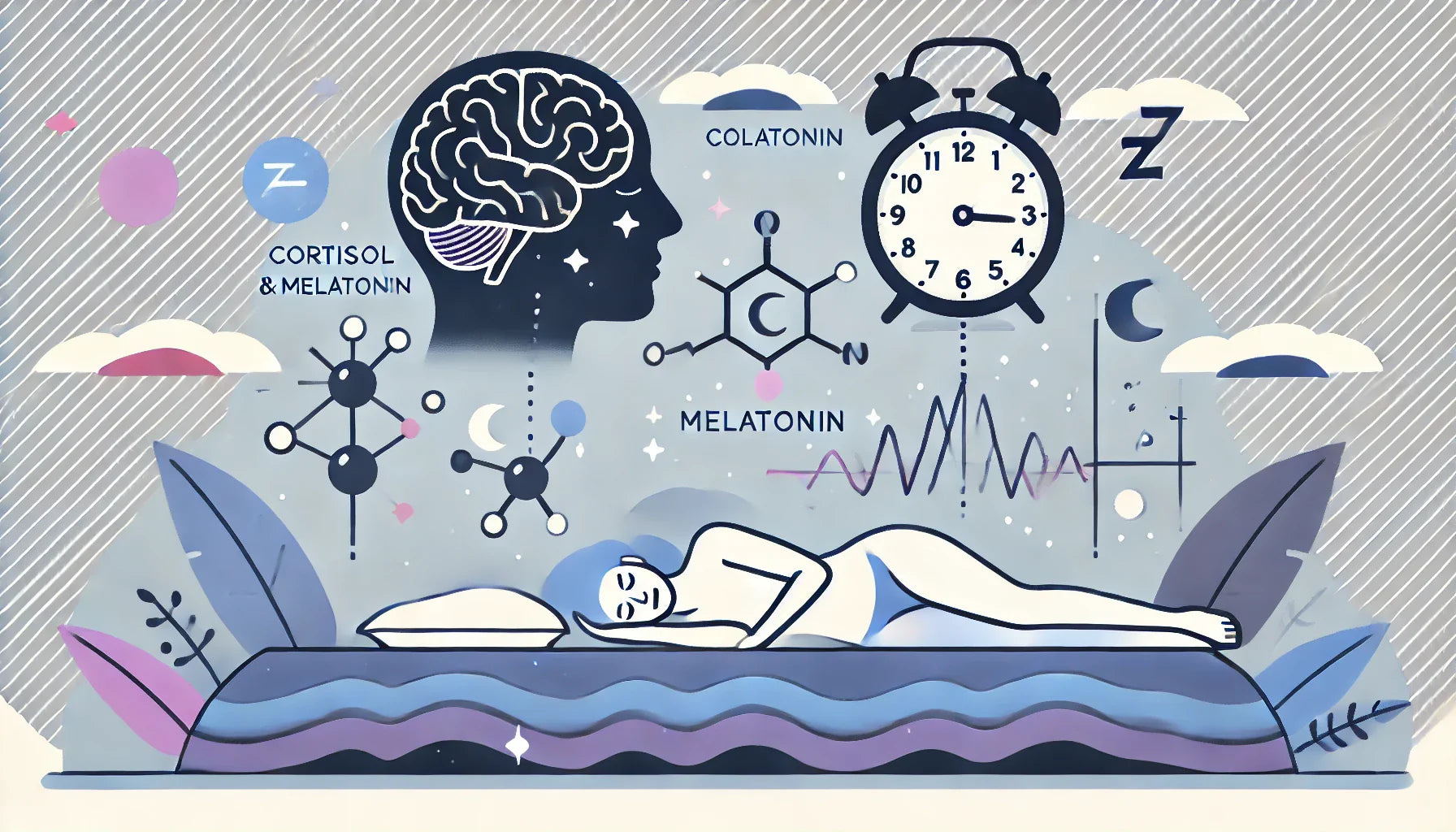
How Cortisol and Melatonin Act in Deep Sleep

Cortisol
Cortisol is a hormone that follows a circadian rhythm, meaning its levels fluctuate throughout the day in response to the light and darkness cycle. Normally, cortisol levels are low at night, allowing the body to relax and prepare for sleep. However, elevated cortisol levels, often caused by stress, can interfere with the ability to fall asleep and achieve deep, restorative sleep.
-
Cortisol Circadian Rhythm: Cortisol levels begin to rise in the early morning, peaking around 8 a.m., which helps to wake up and stay alert during the day. At night, cortisol levels decrease, allowing the body to relax and enter the deeper stages of sleep (BioMed Central).
-
Interference with Sleep: When cortisol is elevated due to chronic stress, it can lead to insomnia or frequent awakenings during the night. This is because cortisol activates the sympathetic nervous system, keeping the body in a state of alert that is incompatible with deep sleep (MDPI).
Melatonin
Melatonin is a hormone produced by the pineal gland in the brain in response to darkness. It is crucial for regulating the sleep-wake cycle and helps induce and maintain deep sleep.
-
Melatonin Production: Melatonin production increases with darkness, peaking during the night, and decreases with daylight. This increase in melatonin tells the body it's time to sleep, facilitating the transition to deep sleep stages (SpringerLink).
-
Deep Sleep Induction: Melatonin not only helps initiate sleep but is also crucial for maintaining the deeper phases of sleep, known as slow-wave sleep (SWS). This type of sleep is essential for physical recovery and memory consolidation (Frontiers).
Interaction between Cortisol and Melatonin
The balance between cortisol and melatonin is vital for a healthy sleep cycle. While melatonin promotes sleep, cortisol aids wakefulness and alertness. An imbalance between these hormones, such as high cortisol levels at night, can suppress melatonin production and thus negatively affect sleep quality.
-
Mutual Inhibition: Melatonin and cortisol have opposing effects. Melatonin inhibits cortisol production and vice versa. Therefore, an excess of cortisol can reduce the effectiveness of melatonin in inducing sleep (MDPI) (Frontiers).
-
Healthy Circadian Rhythm: Maintaining a healthy circadian rhythm involves ensuring that cortisol levels decrease at night and that melatonin production is not interfered with. This can be achieved through stress management practices, exposure to natural light during the day, and maintaining a dark environment at night.
Cortisol and melatonin play complementary roles in sleep regulation. Cortisol promotes alertness and wakefulness during the day, while melatonin induces and maintains deep sleep at night. Maintaining a healthy balance between these hormones is crucial for good sleep quality and overall well-being.
Benefits of CBD for Anxiety and Productivity
Improved Sleep Quality
Stress and elevated cortisol levels can interfere with sleep quality. CBD has been shown to be effective in improving sleep quality by reducing anxiety and promoting relaxation (MDPI). Adequate sleep is crucial for maintaining normal cortisol levels and improving daily productivity.
Increased Productivity
By reducing stress and anxiety levels, and by improving sleep quality, CBD can contribute to increased productivity. Less stress means a clearer and more focused mind, allowing for better performance in work and personal tasks. Additionally, cortisol regulation can prevent fatigue and improve mental and physical endurance.
Integrating CBD into Your Daily Routine
CBD Supplements
The market offers a variety of CBD products, such as oils, capsules, and edibles. In our store, we exclusively carry the brand Organic YOIL CBD Oils, which is specially formulated to maintain all terpenes and properties. These can be easily integrated into a daily routine. It is advisable to start with a low dose and adjust it according to individual needs. Consulting a healthcare professional before starting CBD use is crucial to ensure its safety and effectiveness.
Healthy Lifestyle
To maximize the benefits of CBD in cortisol regulation, it is important to maintain a healthy lifestyle. This includes a balanced diet, regular exercise, and stress management techniques such as meditation and yoga. Combining these practices with CBD use can offer a holistic approach to managing stress and improving overall well-being.
And what do we learn from this?
CBD shows great potential to help regulate cortisol levels, the stress hormone, offering a natural way to reduce anxiety and improve productivity. By integrating CBD into daily routines along with healthy lifestyle habits, it is possible to achieve optimal hormonal balance and overall well-being. Research in this field continues to advance, but current results are promising and suggest that CBD can be a valuable tool for managing stress and its adverse effects.
And now, to continue, how about something related to longevity? Amazing! How CBD Reduces Oxidative Stress in Your Body (cbdacasa.es)
Scientific References
Here are scientific studies that have investigated how CBD can help reduce stress:
-
"Reasons for cannabidiol use: a cross-sectional study of CBD users, focusing on self-perceived stress, anxiety, and sleep problems": This study found that many CBD users reported significant improvement in managing stress, anxiety, and sleep problems. The survey was conducted with 387 CBD users, a large proportion of whom stated that CBD helped them reduce stress (BioMed Central)
- "Cannabidiol as a Potential Treatment for Anxiety Disorders": This article reviews preclinical evidence that supports the use of CBD as a treatment for various anxiety disorders, including generalized anxiety disorder and post-traumatic stress disorder. Although more human research is needed, preliminary results are promising (Project CBD).
- "A single dose of cannabidiol reduces blood pressure in healthy volunteers in a randomized crossover study": This study found that a single dose of 600 mg of CBD reduced blood pressure and the cardiovascular response to stress in healthy volunteers, suggesting that CBD may help mitigate the physical response to stress (JCI Insight).
- "The therapeutic role of Cannabidiol in mental health: a systematic review": This systematic review examines the existing evidence on the therapeutic effects of CBD on mental health, highlighting its potential to reduce stress and improve overall well-being. Although the need for more large-scale studies is noted, current data are encouraging (BioMed Central).










%20is%20known%20for%20its%20many%20health%20benefits,%20among%20which%20is%20the%20regulation%20of%20cortisol,...)