The Endocannabinoid System: The Guardian of Balance
Imagine your body is an immense and vibrant city. In this metropolis, the nervous, immune, and metabolic systems are like the main districts working tirelessly. However, for a city to function, it's not enough for each neighborhood to do its job; a traffic and emergency management system is needed to prevent streets from collapsing, fire alarms from sounding without reason, and supplies from reaching where they are needed at the right time.
This invisible but omnipresent manager is the Endocannabinoid System (ECS). Although it is one of the most important discoveries in modern medicine, for centuries it remained hidden in plain sight. Its discovery not only changed our understanding of cannabis but also revealed a fundamental piece of what it means to be healthy.
A Reverse Discovery: From Plant to Human
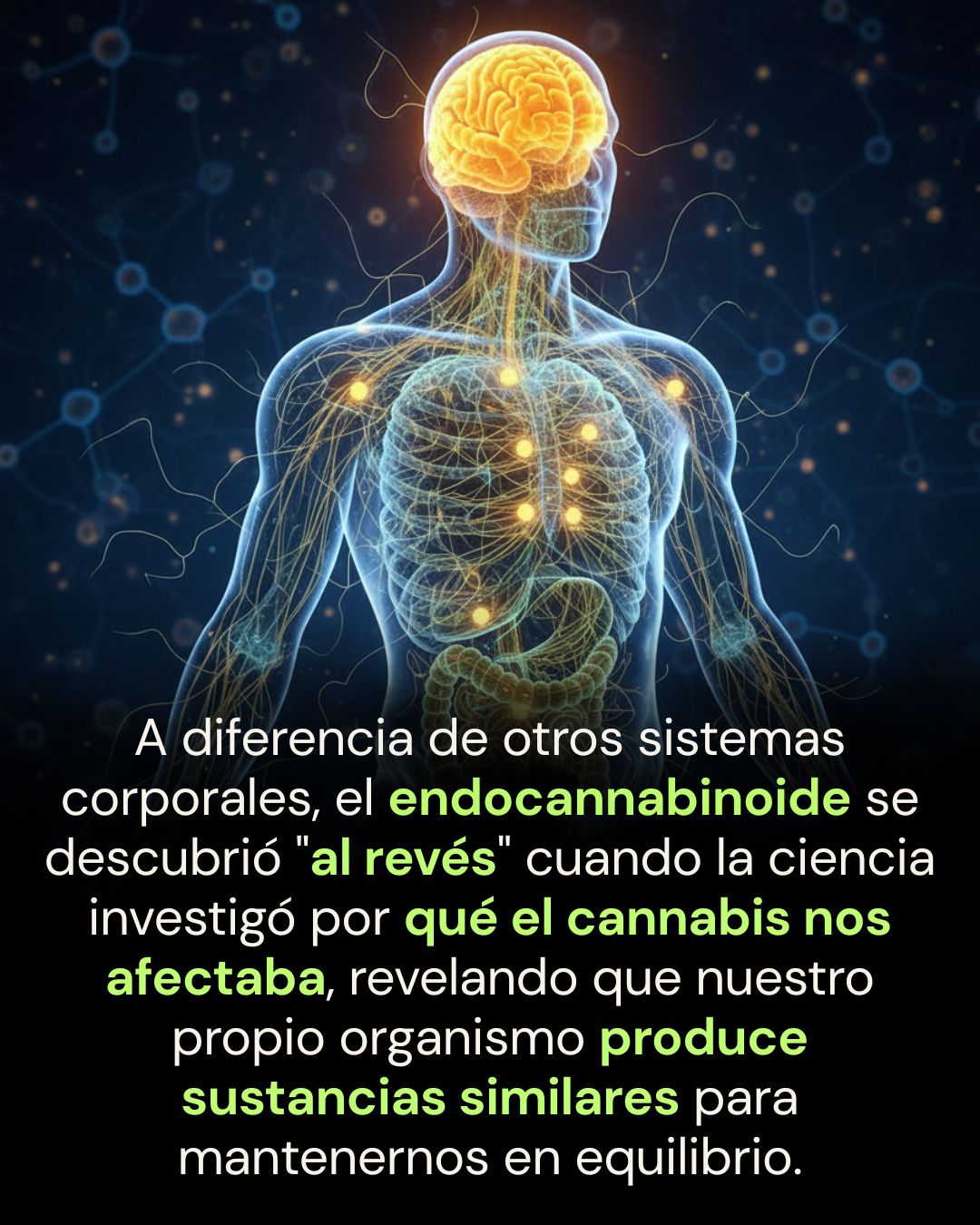
Most body systems were discovered by studying our own anatomy. However, with the ECS, something curious happened: we discovered it "in reverse." First, we learned about the external substance (cannabis), then we sought to understand why it affected us, and finally, we found that we ourselves produced similar substances.
Years of Mystery and the Genius of Mechoulam
Despite humans having used cannabis for millennia, no one really knew how it worked in the brain. In the 1930s, scientists like Roger Adams tried to isolate its components, but the plant's structure was a chemical puzzle too complex for the technology of the time.
Everything changed in the 1960s in Israel. Dr. Raphael Mechoulam, now considered the "father of cannabinoid research," achieved what no one else had: isolating and describing the structure of CBD (Cannabidiol) in 1963 and THC (Tetrahydrocannabinol) in 1964. This was the first major milestone. With pure molecules, science could stop guessing and start experimenting.

The Discovery of "Locks" and "Keys"
For years, it was thought that cannabis worked non-specifically, like an oil stain altering neurons. But in 1988, researcher Allyn Howlett discovered that our brain has specific receptors—a kind of molecular "locks"—designed to perfectly fit these molecules. They named this first lock CB1. In 1993, a second lock, CB2, was discovered, located primarily in our defenses (the immune system).
This raised a fascinating question: Why would our body have locks for a plant? The answer came in 1992, when Mechoulam's team isolated Anandamide, a substance our own brain produces that fits into those same receptors. They named it after the Sanskrit word Ananda, meaning "absolute bliss." We didn't have receptors for a plant; we had an internal communication system for which the plant simply held "copies of the keys."
The System's Architecture: How Does This Regulator Work?
The Endocannabinoid System is not an organ like the heart, but a communication network distributed throughout the body. Its architecture is based on three pillars:
- Receptors (The Sentinels): CB1 is mostly found in the brain and controls pain, memory, and emotions. CB2 is in the immune system, monitoring inflammation.
- Endocannabinoids (The Messengers): These are substances like Anandamide that the body produces "on demand." They are not stored; they are created precisely when needed to send a message.
- Enzymes (The Cleanup Crew): Once the message is delivered, enzymes like FAAH destroy the messengers so that the signal does not last longer than necessary.
The "Biological Brake" and Retrograde Communication
The greatest genius of the ECS is that it functions as a safety brake. In normal neuronal communication, messages travel from neuron A to neuron B. But when neuron B feels overwhelmed or overexcited (by pain, stress, or inflammation), it produces endocannabinoids that travel backward, to neuron A, to tell it: "Slow down, that's enough."
This ability to send signals "backward" allows the body to prevent chaos and hyperexcitability, protecting the brain from damage due to excessive activity. It is, in essence, the system that allows us to regain balance after a crisis.
The Greatest Contribution to Science: Homeostasis
If we had to summarize the contribution of the ECS in a single word, it would be Homeostasis. This technical word simply means dynamic equilibrium.
Science discovered that the ECS is responsible for maintaining our internal stability despite external changes (cold, heat, stress, infections). It regulates everything from appetite and sleep to immune response and pain perception. Without a functional endocannabinoid system, our body would be like a car without brakes or a thermostat: it would eventually self-destruct from pure exhaustion or overheating.
CBD: The Intelligent Ally of the System
This is where CBD (Cannabidiol) comes in, the non-psychoactive component of the plant. Unlike THC, which "takes over" the CB1 receptor (causing the intoxicating effect), CBD is much more subtle and sophisticated.
- It's a volume regulator: CBD binds to a different site on the receptor and changes its shape, making it more difficult for THC or our own messengers to saturate the system. This is why CBD reduces anxiety.
- It boosts our own resources: CBD prevents enzymes from quickly destroying Anandamide. By doing this, it "raises" our natural levels of happiness and calm, allowing our own body to do its healing job better.
- It communicates with other systems: CBD also interacts with Serotonin receptors (the well-being molecule), which explains its antidepressant and anxiolytic effects.

Real Benefits: What Does This Do for Humans?
Knowledge of the ECS has opened the door to treating diseases that were once an enigma. Dr. Ethan Russo proposed the theory of Clinical Endocannabinoid Deficiency. According to this idea, if your body does not produce enough "happiness messengers" or your "locks" are rusty, chronic diseases appear, such as:
- Migraines: It has been observed that people with chronic migraines have less anandamide in their system.
- Fibromyalgia: The lack of ECS modulation causes the body to amplify pain signals that should be mild.
- Irritable Bowel Syndrome: The ECS regulates bowel movement and inflammation; if it fails, the digestive system falls into chaos.
Milestones in Current Medicine
Thanks to this research, we now have medications approved by international regulatory agencies:
- Epidiolex: A purified CBD that has saved lives in children with severe epilepsies resistant to other treatments.
- Sativex: A spray that combines THC and CBD to restore mobility and reduce pain in people with Multiple Sclerosis.
The Future: Towards Precision Medicine
We are entering a new era. We no longer only talk about the "classic" system, but about the Endocannabinoidome, an even vaster network that includes our microbiota (gut bacteria) and other body lipids.
Research for 2025 and 2026 focuses on creating drugs that, instead of introducing external substances, simply help our body not to destroy its own endocannabinoids. This would allow for the treatment of agitation in Alzheimer's patients or chronic pain without the side effects of traditional drugs.
Conclusion
The discovery of the endocannabinoid system has taught us that the human body has an astonishing capacity for self-control and repair. We are not just a collection of loose parts; we are an integrated system that constantly seeks peace and health.
Understanding the ECS means understanding that health is not a static state, but a continuous effort for balance. By caring for this system—whether through nutrition, exercise, or, when necessary, the support of phytocannabinoids like CBD—we are supporting the deepest intelligence of our own biology. Science has lifted the veil on this silent guardian, and what we have found is, simply, the key to a more harmonious and healthy life.
Main sources
Cannabis and Endocannabinoid System
Hiding in plain sight: The discovery of the endocannabinoid system
From Phytocannabinoids to Cannabinoid Receptors and Endocannabinoids: Pleiotropic Physiological and Pathological Roles Through Complex Pharmacology.
The Endocannabinoid System: Components, Actions, and Optimization
The endocannabinoid system, cannabis, and cannabidiol: Implications in urology and men's health
Review of the Endocannabinoid System
History of cannabis and the endocannabinoid system
Raphael Mechoulam and the history of cannabis research
Cannabinoid pharmacology: the first 66 years
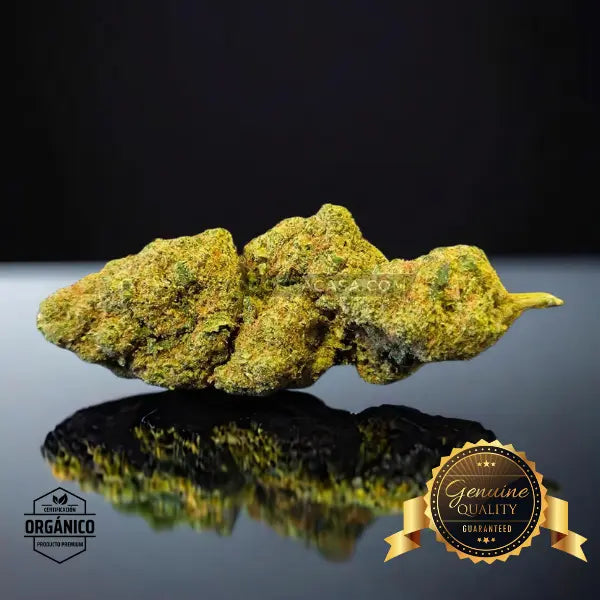
High CBD concentration, for experts only, our Limoncello CBD Crumble - 87% premium citrus extract. It is recognized for its relaxing properties and often alleviates sleep and appetite disorders.

Thank you for the reviews